
You’ll create a calm, tactile living room by layering soft neutrals—warm greige walls, chalky ivory accents and muted terracotta or sage—then add varied textures like boucle, linen and matte ceramics to keep things cozy yet refined. Think low-profile seating, layered rugs and sculptural pieces that catch light, with minimalist styling and a few plants for life. Keep going to see 22 practical ways to bring this quiet, inviting look to your home.
Choose a Soft Neutral Paint Palette
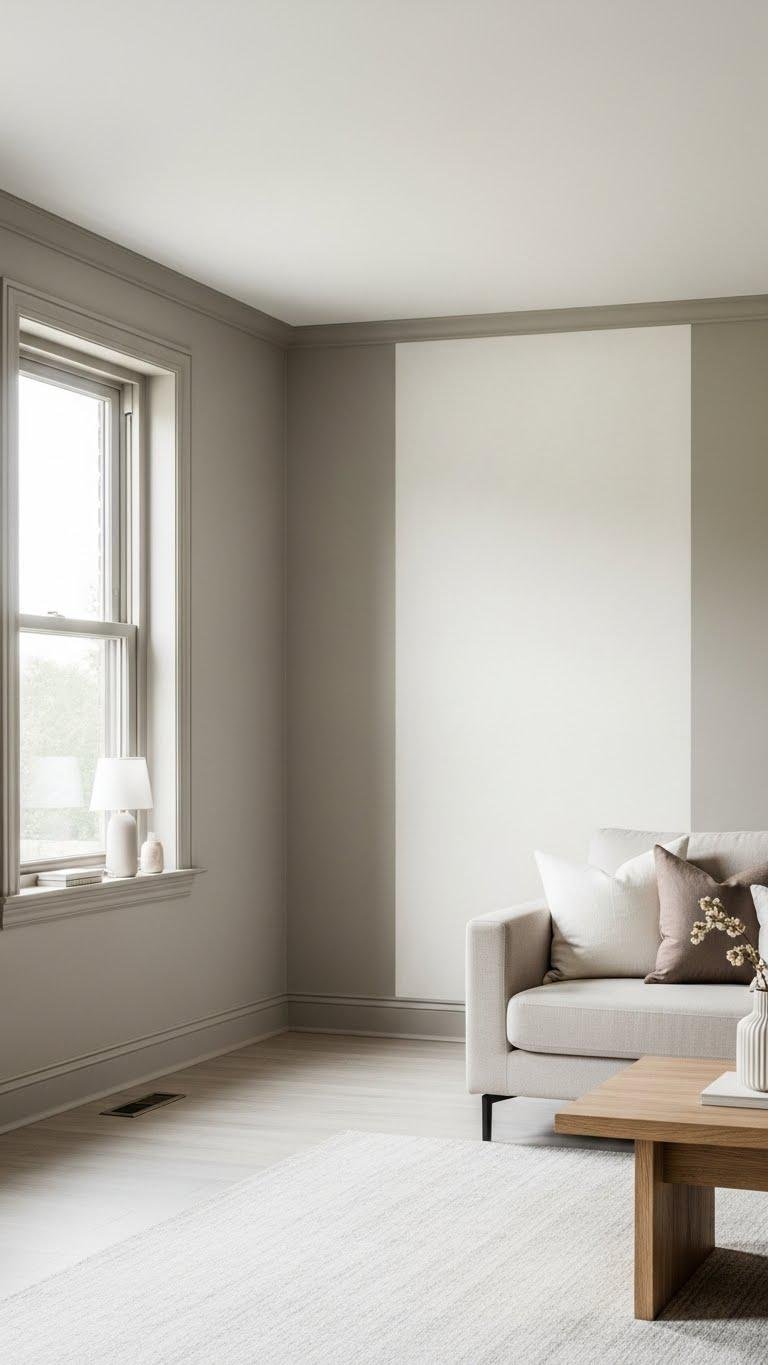
When you pick a soft neutral paint palette, aim for layered depth rather than flat sameness: choose a base like warm greige, muted taupe, or chalky ivory, then add accents in slightly darker or cooler tones to create subtle contrast.
You’ll favor matte greige walls for calm reflection, introduce warm taupe on trims or an accent wall, and keep finishes low-sheen for a liberated, serene feel.
Layer Muted Earth Tones
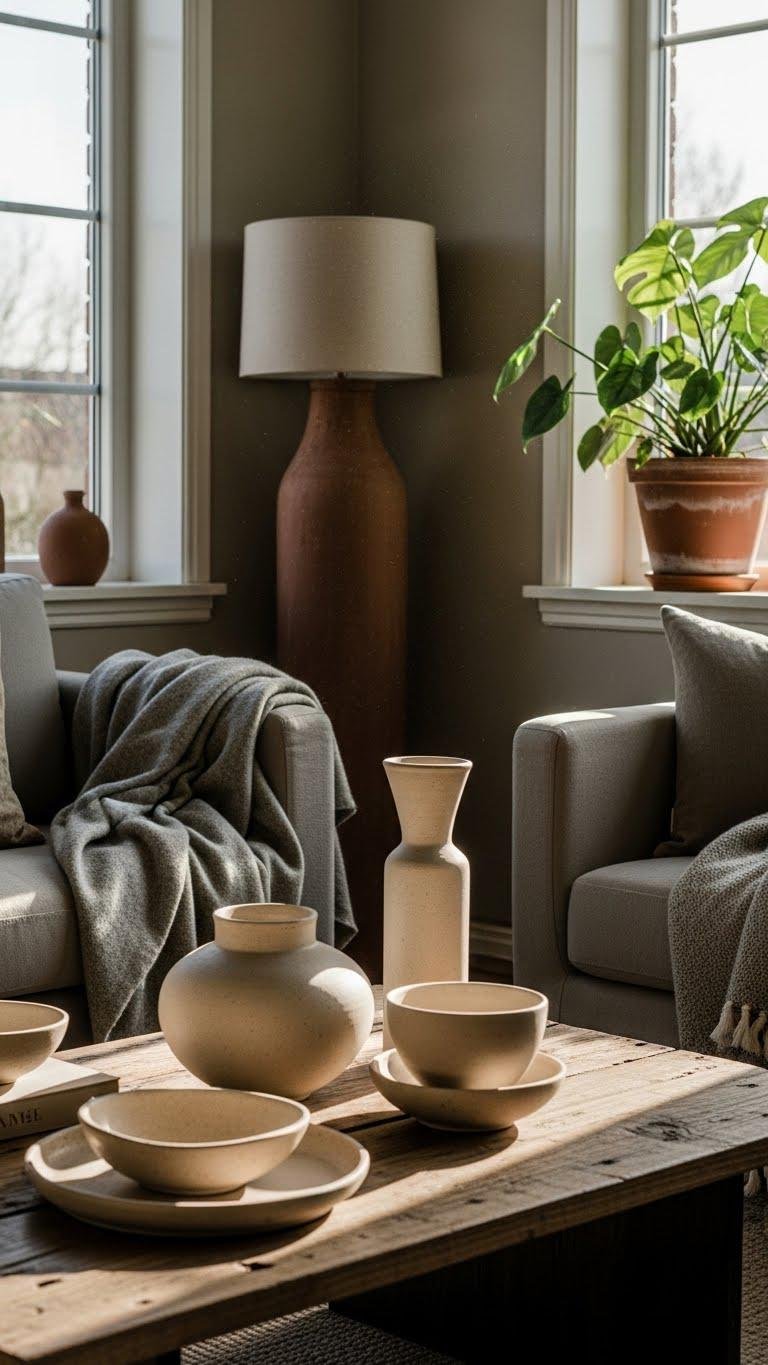
Although muted earth tones might seem understated, they bring depth and warmth when layered thoughtfully. You’ll pair weathered terracotta accents with muted sage textiles, grounding the space without feeling heavy. Mix textured linens, a soft wool throw, and matte ceramics to create visual layers. Keep contrasts gentle, let natural light reveal subtle shifts, and allow the palette to breathe for a free, calm ambiance.
Add Muddy Pastel Accents
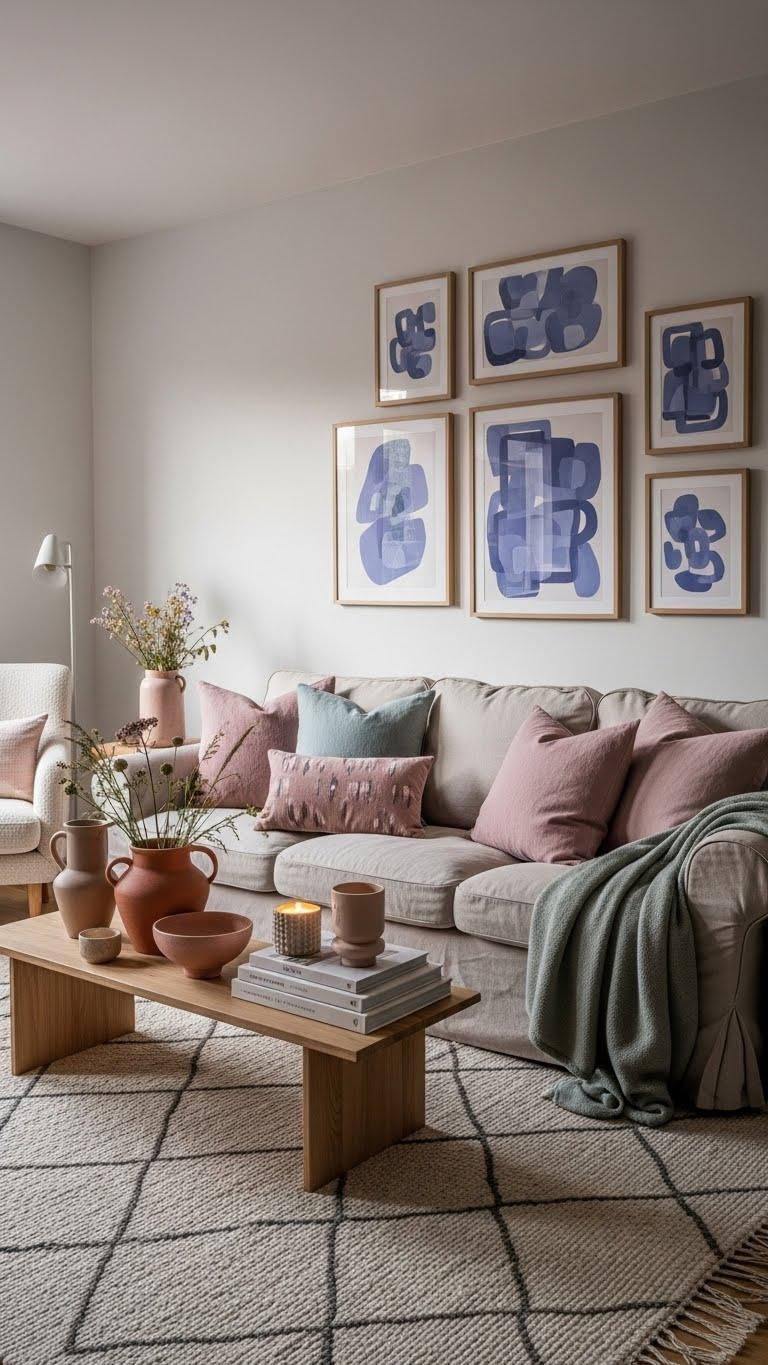
Bring in muddy pastel accents to soften the room’s palette without losing the earthy backbone; these slightly desaturated pinks, dusty blues, and warm grayed yellows add personality while staying restrained. You’ll layer muted mauve cushions, dusty sage throws, terracotta blush ceramics, and smoky periwinkle art to create calm contrast. Choose tactile fabrics and simple shapes so your space feels liberated, collected, and quietly expressive.
Incorporate Warm Neutrals and Creams
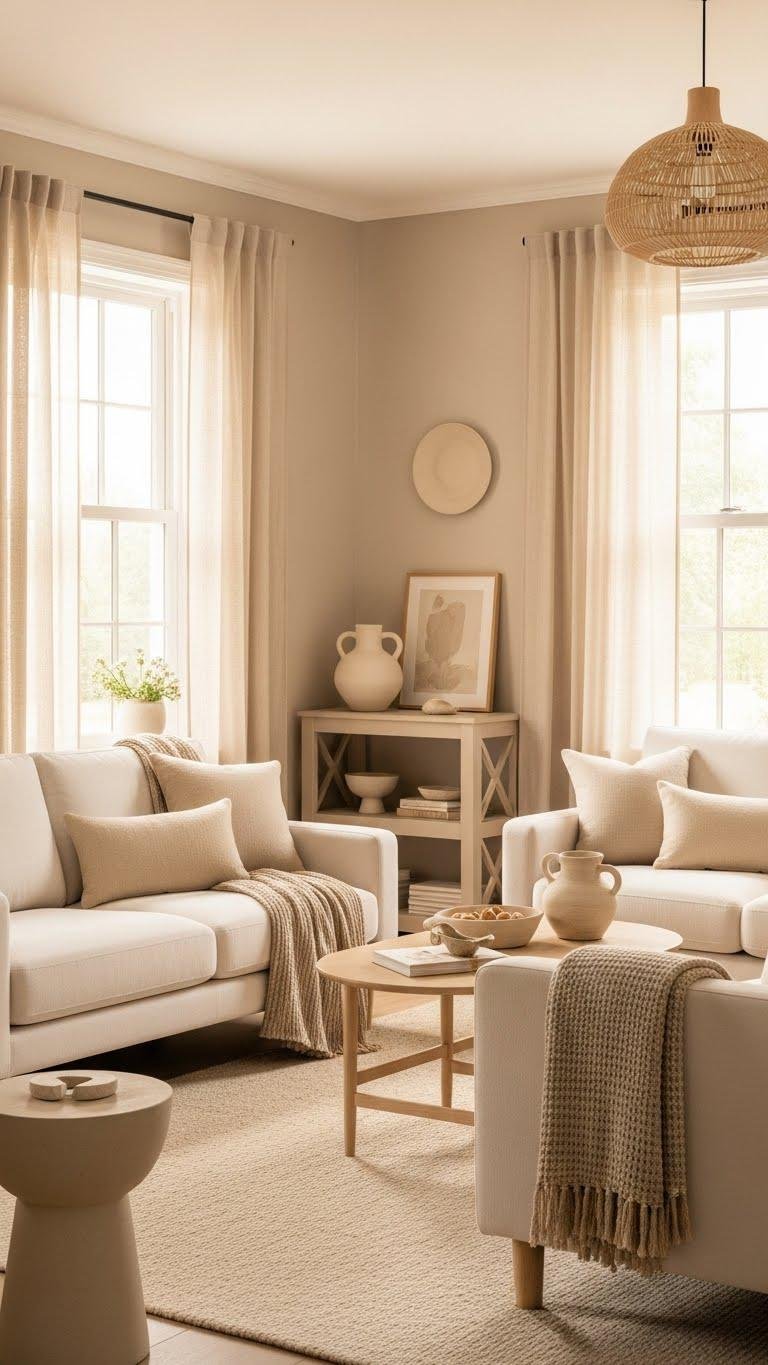
If you want your living room to feel quietly inviting, layer warm neutrals and creams as the foundation of the palette—soft latte walls, ivory upholstery, and pale sand rugs will anchor moodier accents without competing.
You’ll pair sunlit linen curtains with textured throws, introduce creamy ceramics on open shelving, and choose matte wood tones to keep the room airy, calm, and effortlessly free.
Use Velvet and Bouclé Upholstery
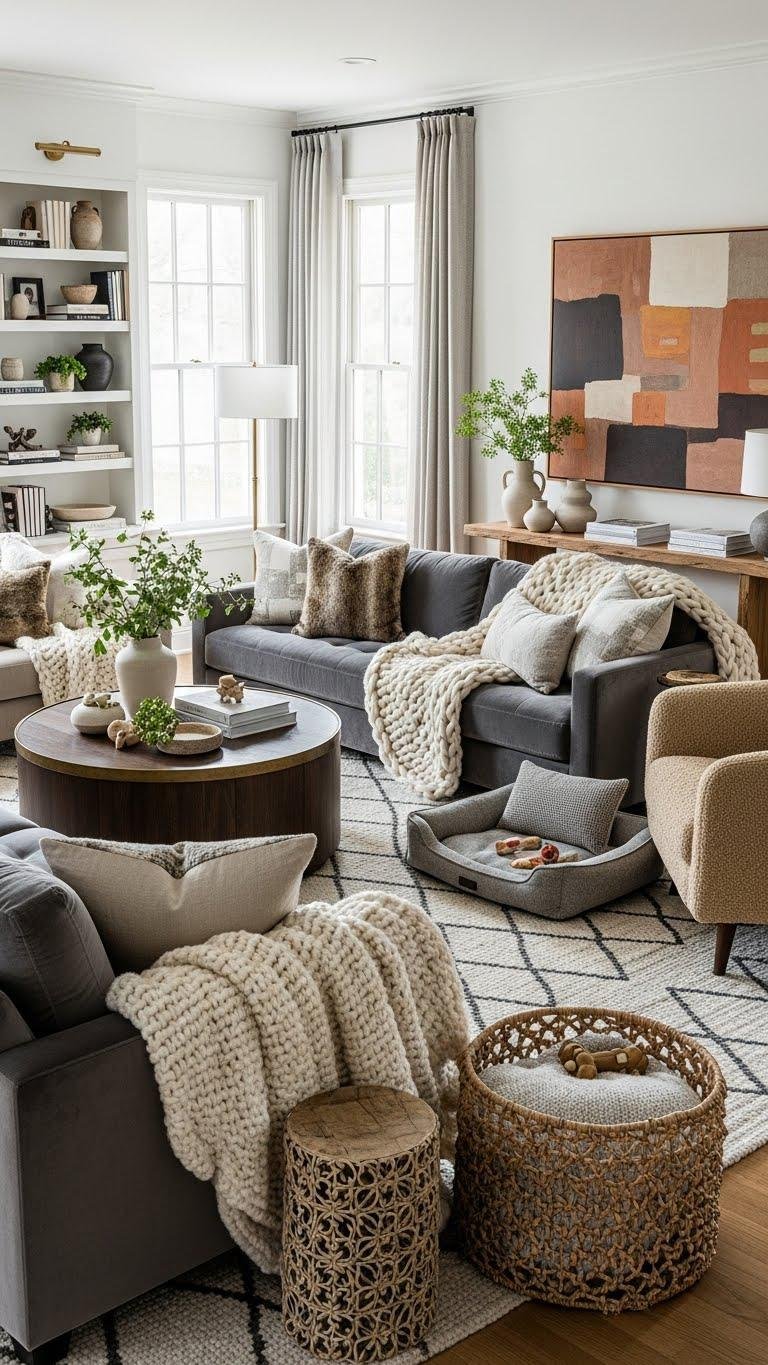
Layer plush velvet and nubby bouclé as complementary textures to give your living room depth and a tactile, upscale feel. You’ll choose pieces in muted tones that invite relaxation while prioritizing sustainable upholstery options. Opt for pet friendly fabrics with tight weaves and stain-resistant finishes so your freedom to live fully isn’t compromised. Balance pieces for an elegant, lived-in aesthetic.
Layer Throws and Cushions for Texture
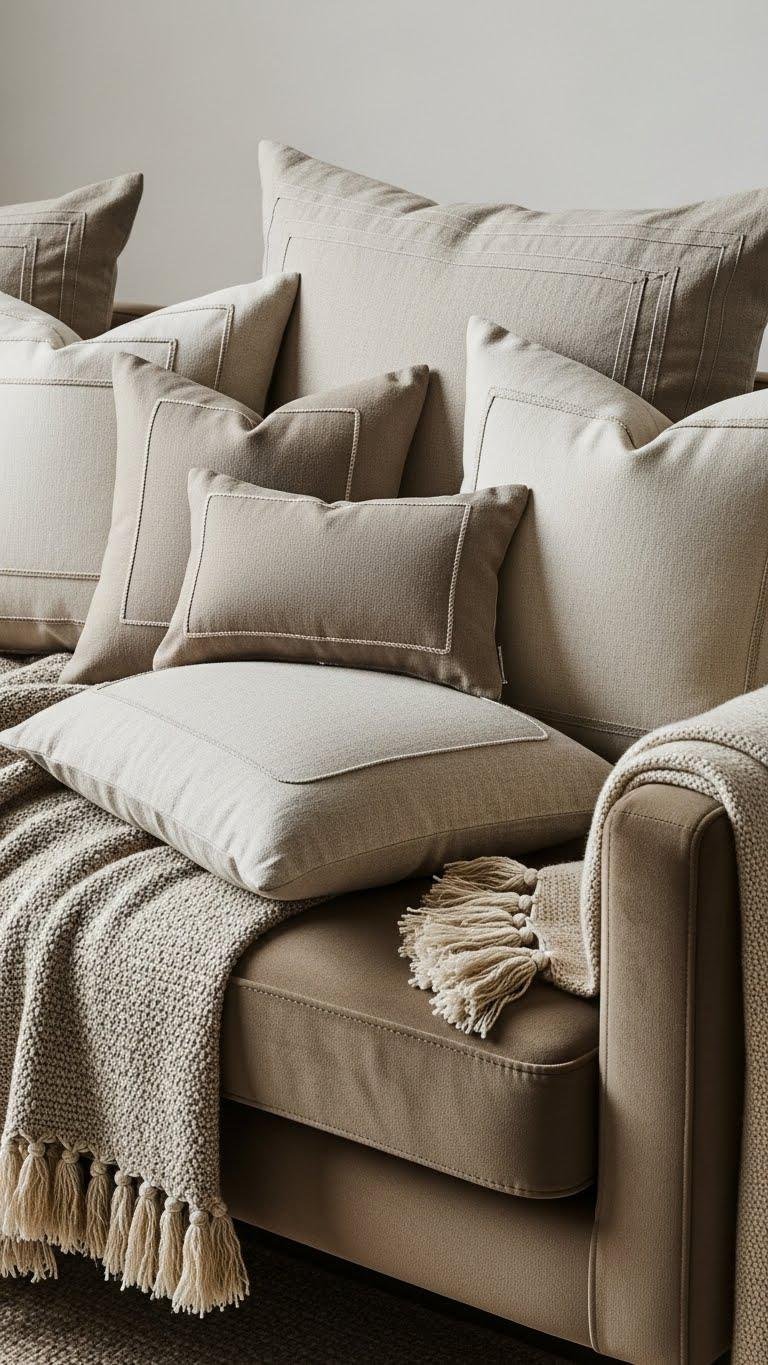
Now that you’ve chosen velvet and bouclé to set a tactile foundation, add throws and cushions to refine the room’s mood and invite touch. Layer hand stitched pillows with varying scales and neutral hues, mix smooth linen with nubby textures, and drape tasseled edge throws casually over arms.
You’ll create a relaxed, curated space that feels open, tactile, and effortlessly personal.
Install Thick Woven Natural Fiber Rugs
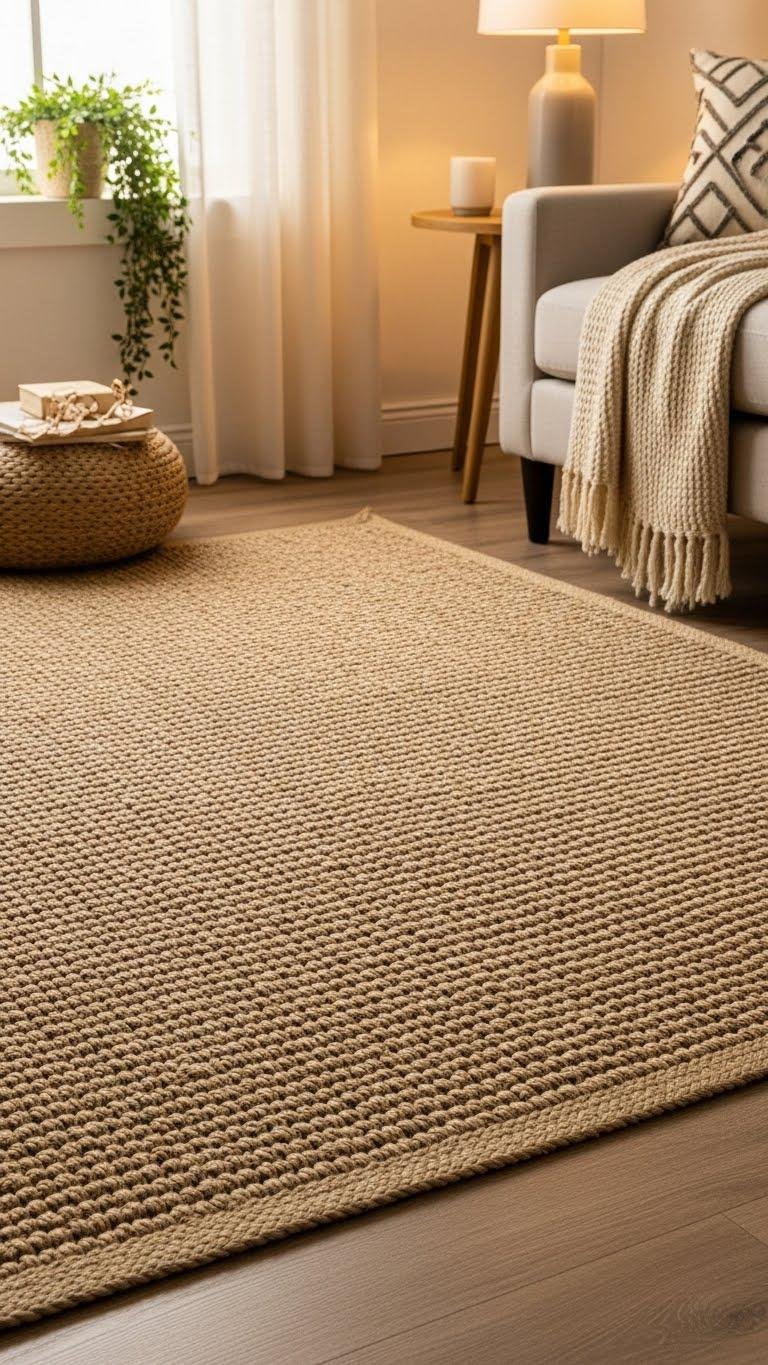
A thick woven natural-fiber rug anchors the room with quiet warmth and tactile depth, so choose one that complements your palette and foot traffic.
You’ll favor handwoven seagrass for organic texture; pair it with jute padding to soften steps and protect floors.
Position rugs to define seating, keep edges clean, and let the natural weave invite relaxed movement and liberated calm.
Maximize Natural Light With Sheer Drapes
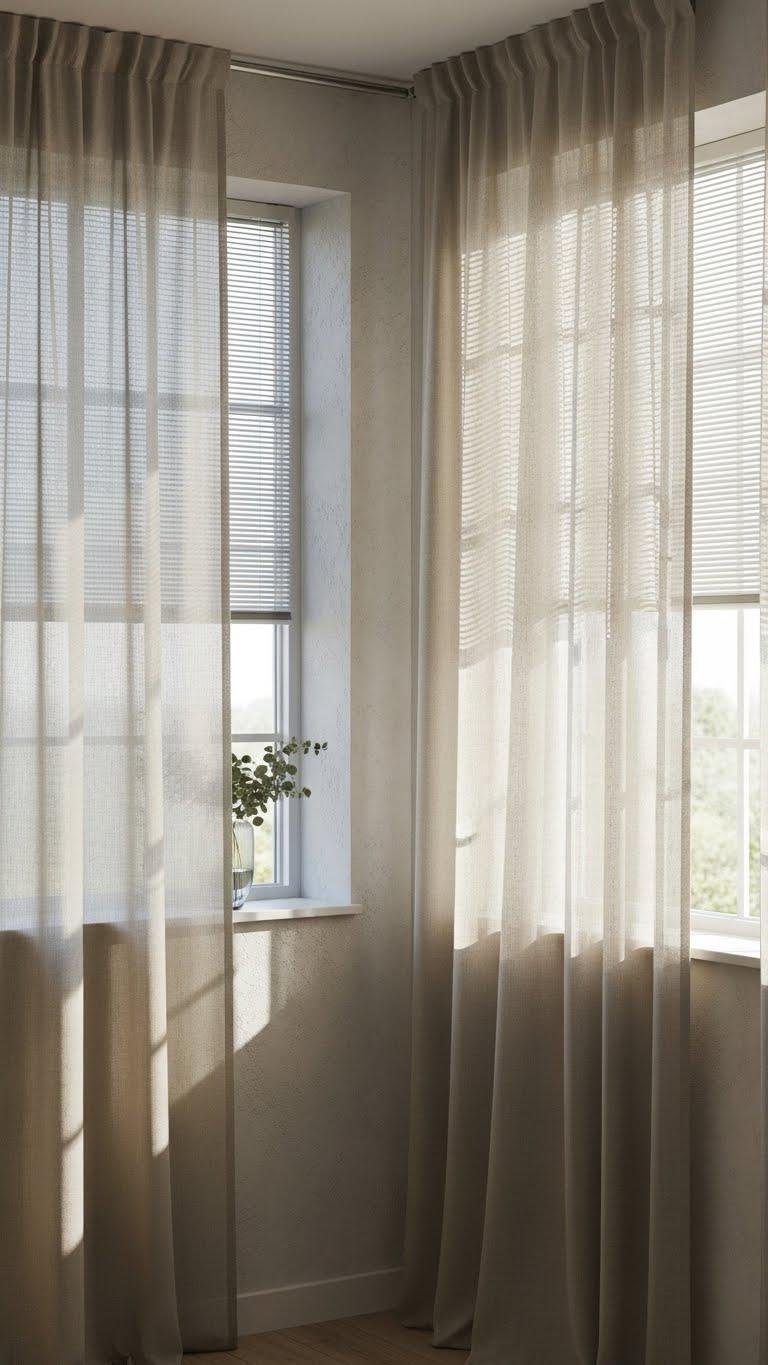
When you want the room to feel airy without sacrificing privacy, sheer drapes are your best move: they filter sunlight into a soft, even glow that lifts textures and colors while keeping views softly obscured.
Choose linen panels for a tactile, breathable privacy layer, pair with discreet solar shades for UV protection when needed, and arrange panels to frame windows, freeing the space.
Add Dimmable Warm Lighting
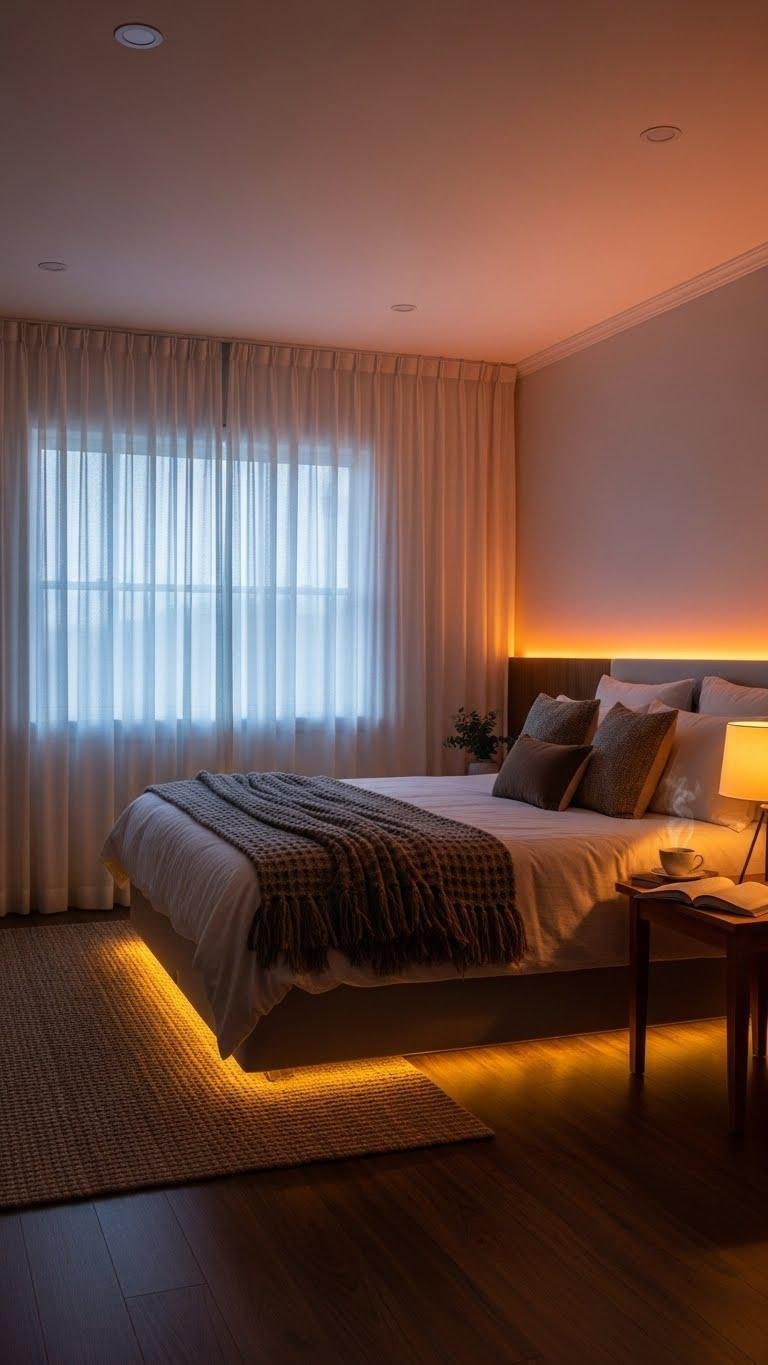
The atmosphere is serene and inviting, showcasing a transition from bright tasks to a calm, relaxing environment.
The setup emphasizes comfort, warmth, and the ability to adjust lighting for different moods.
Include Candles and String Lights
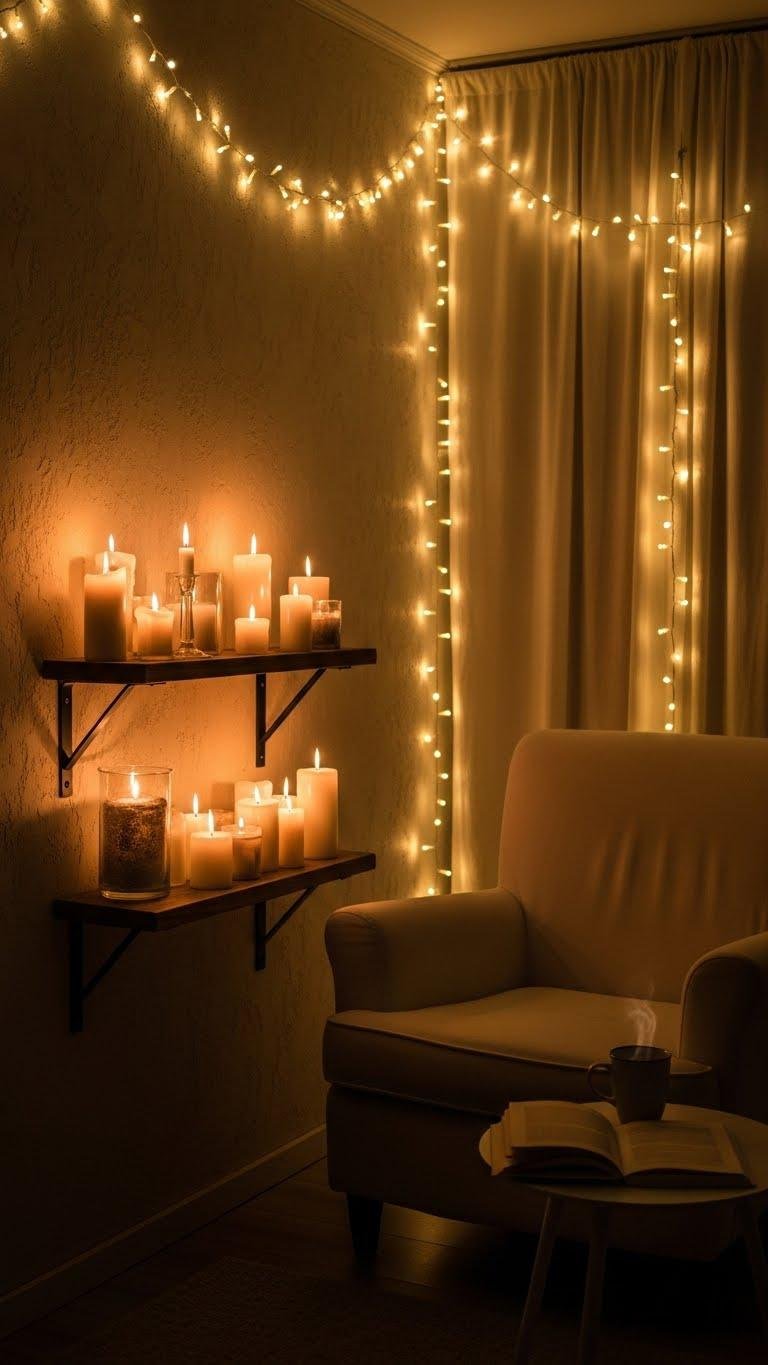
Bring in candles and string lights to soften edges and layer a room’s glow; they’re an easy way to shift the mood from functional to intimate. You’ll place candles for scent layering and tuck string lights for ambient placement along shelves or behind textiles. Choose unscented flames near fabric, rotate scents for freedom, and keep lines subtle to preserve a calm, uncluttered aesthetic.
Bring in Indoor Plants for Calm
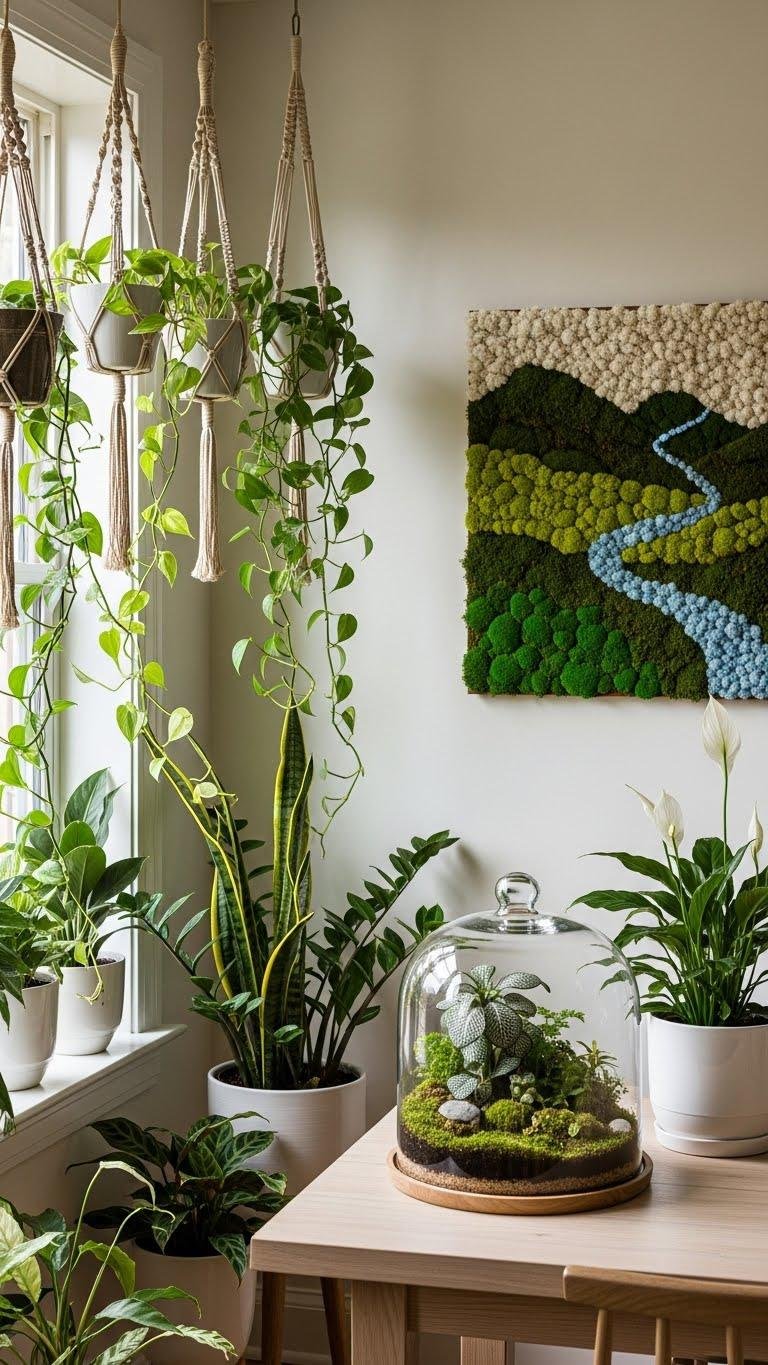
With a few well-chosen pots and tidy placement, indoor plants can instantly quiet a room and soften its lines; they add texture, life, and a subtle visual rhythm that calms the eye.
You’ll choose air purifying greens, arrange trailing planters for graceful movement, and place moss art or tabletop terrariums as focal points. Each piece breathes freedom into a serene, uncluttered space.
Mix Natural Materials: Wood, Rattan, Bamboo
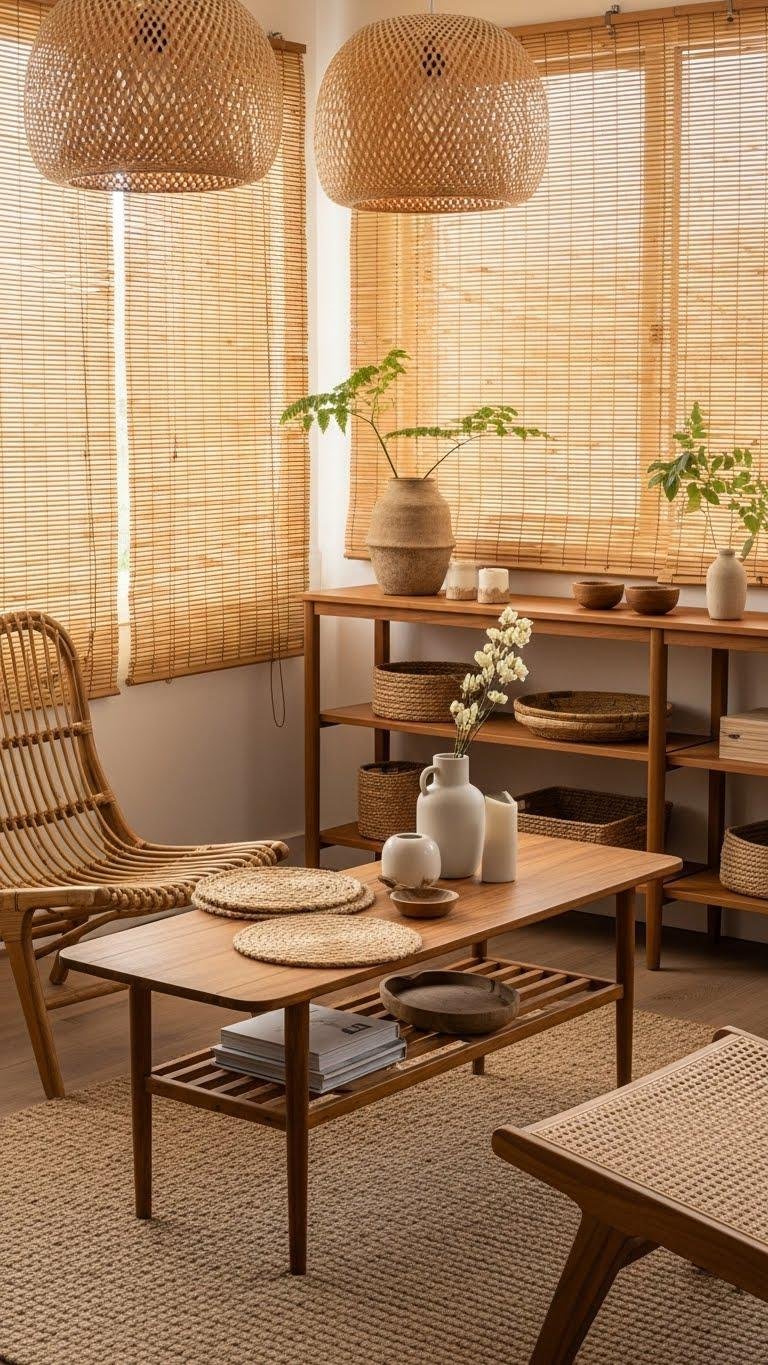
A few carefully chosen pieces of wood, rattan, and bamboo will give your living room a layered, tactile warmth without feeling heavy. Pair a slim teak coffee table with rattan chairs, sisal placemats on open shelving, and bamboo blinds for airy privacy.
Add woven pendant lights to create soft pools of glow. The mix feels free, calm, and intentionally simple.
Use Botanical or Subtle Patterned Wallpaper
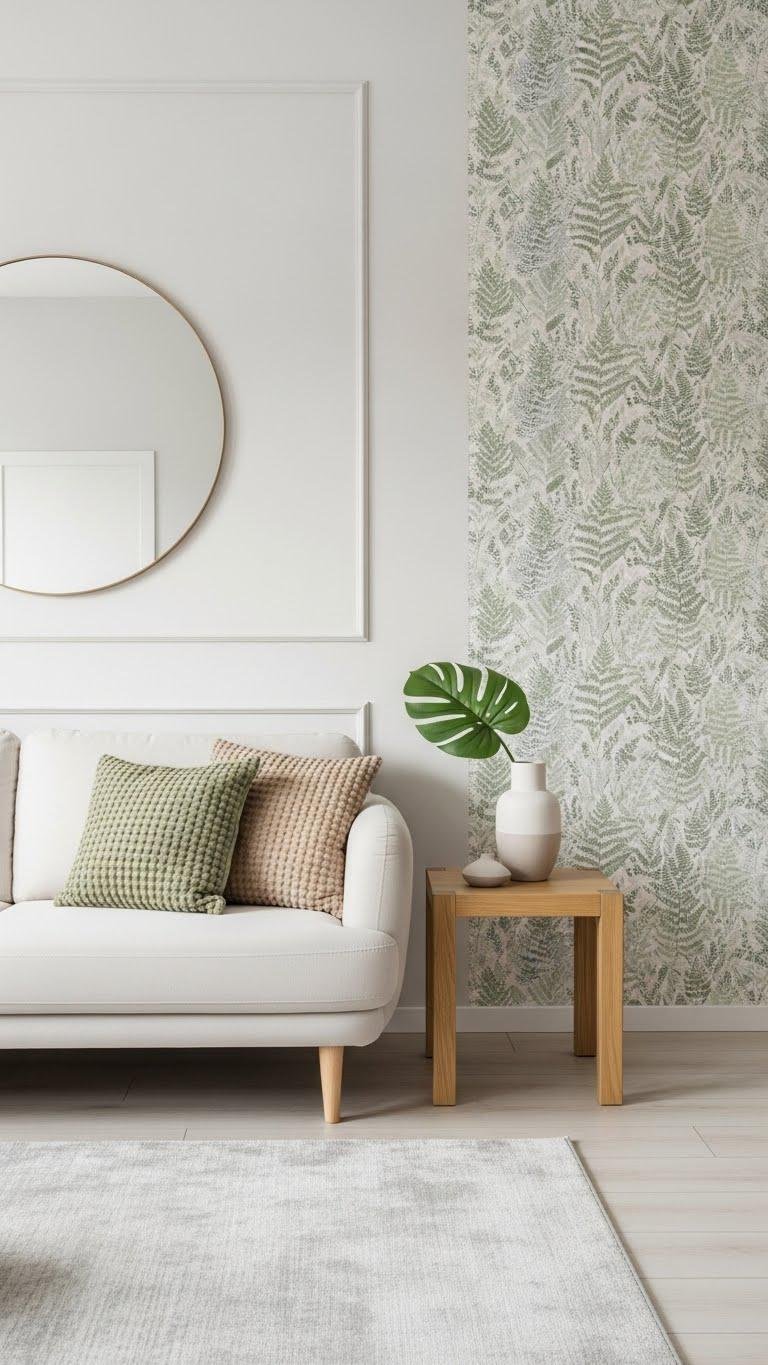
Introduce botanical or subtle patterned wallpaper to give your soft living room a quiet focal point that feels both curated and easygoing. You’ll pick a tropical fernscape or muted vintage botanical prints motif to invite nature without overwhelm.
Keep scale small, colors desaturated, and pair with neutral walls and simple trim. The result feels liberated, intentional, and serene—an easy backdrop for personal expression.
Choose Comfortable, Oversized Seating
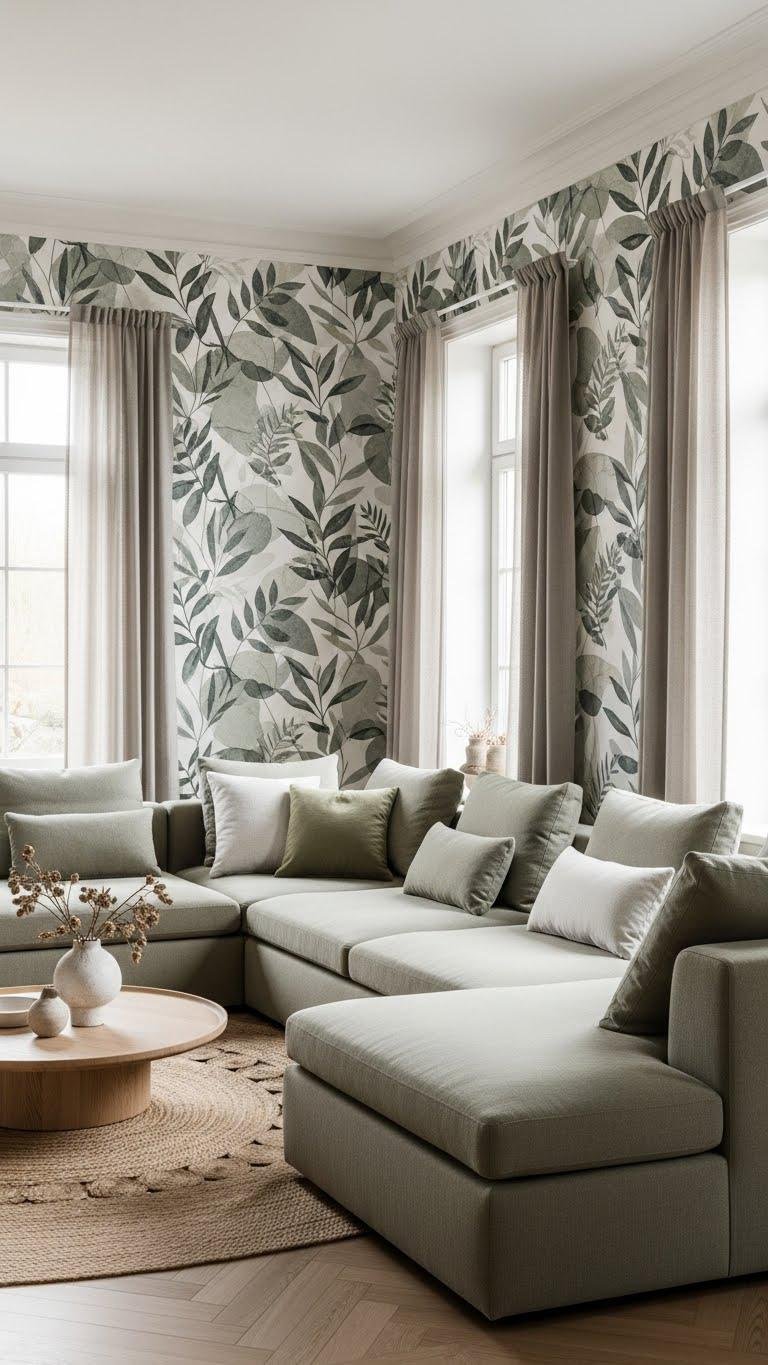
After bringing a quiet botanical print to the walls, choose oversized seating to anchor the room and invite lingering. You’ll favor pieces with soft curves, low profiles, and a deep floor feel that encourages stretching out. Opt for a modular chaise to rearrange freely, layered with breathable linens and muted tones. Keep proportions generous but uncluttered for an open, calm atmosphere.
Create a Cozy Reading Nook
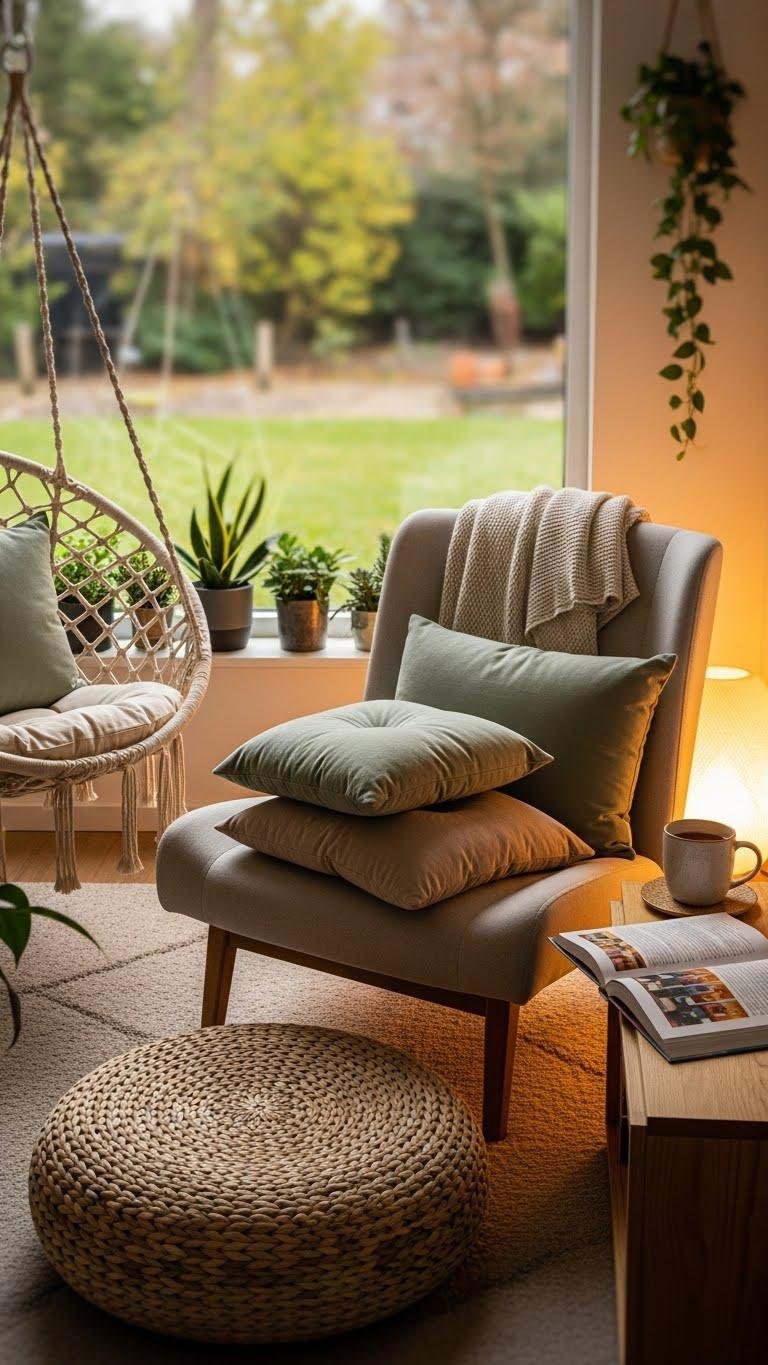
When you carve out a small corner for reading, think of it as a quiet stage where texture and light take the lead: place a low-backed chair or chaise with soft curves near a window, layer a breathable linen throw and a couple of down-filled cushions, and add a narrow side table to hold a cup and a book.
Add a floor pouf, teardrop chair, soft lamp.
Arrange Conversation Areas Around a Focal Point
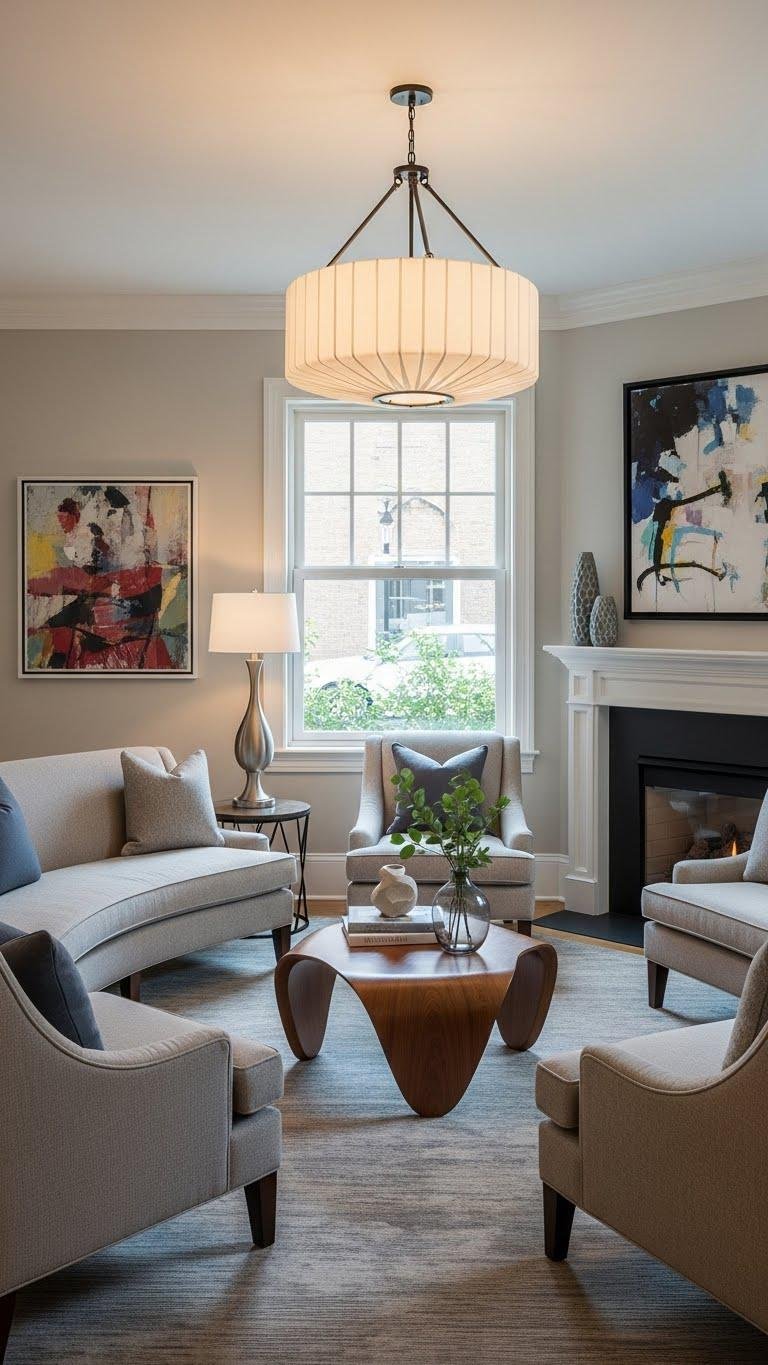
Start by centering your seating around a clear focal point—like a fireplace, large window, or sculptural coffee table—so conversation naturally flows toward that anchor. Arrange intimate seating in a gentle arc, leaving breathing room and sightlines. Add focal artwork or a statement light to guide attention, balance proportions, and invite relaxed interaction without clutter, preserving a calm, liberated atmosphere.
Declutter and Embrace Minimal Styling
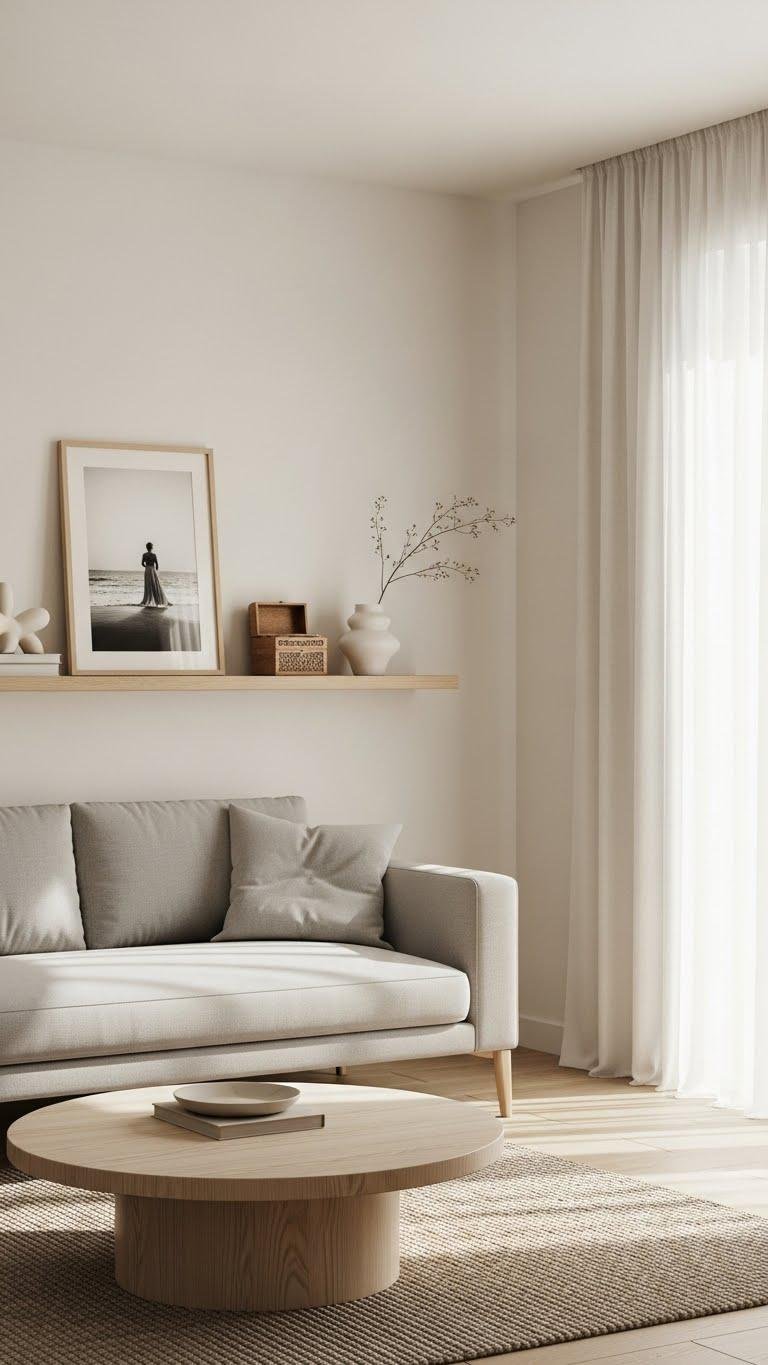
Clear away excess so your room can breathe and the few chosen pieces really sing. You’ll practice mindful decluttering, keeping only items that support calm and function. Embrace sentimental minimization by photographing keepsakes and storing select treasures. Choose a restrained palette, streamlined furniture, and purposeful decor. This minimalist approach frees your movement and attention, letting softness and intention define the space.
Use Soft Window Treatments to Soften Space
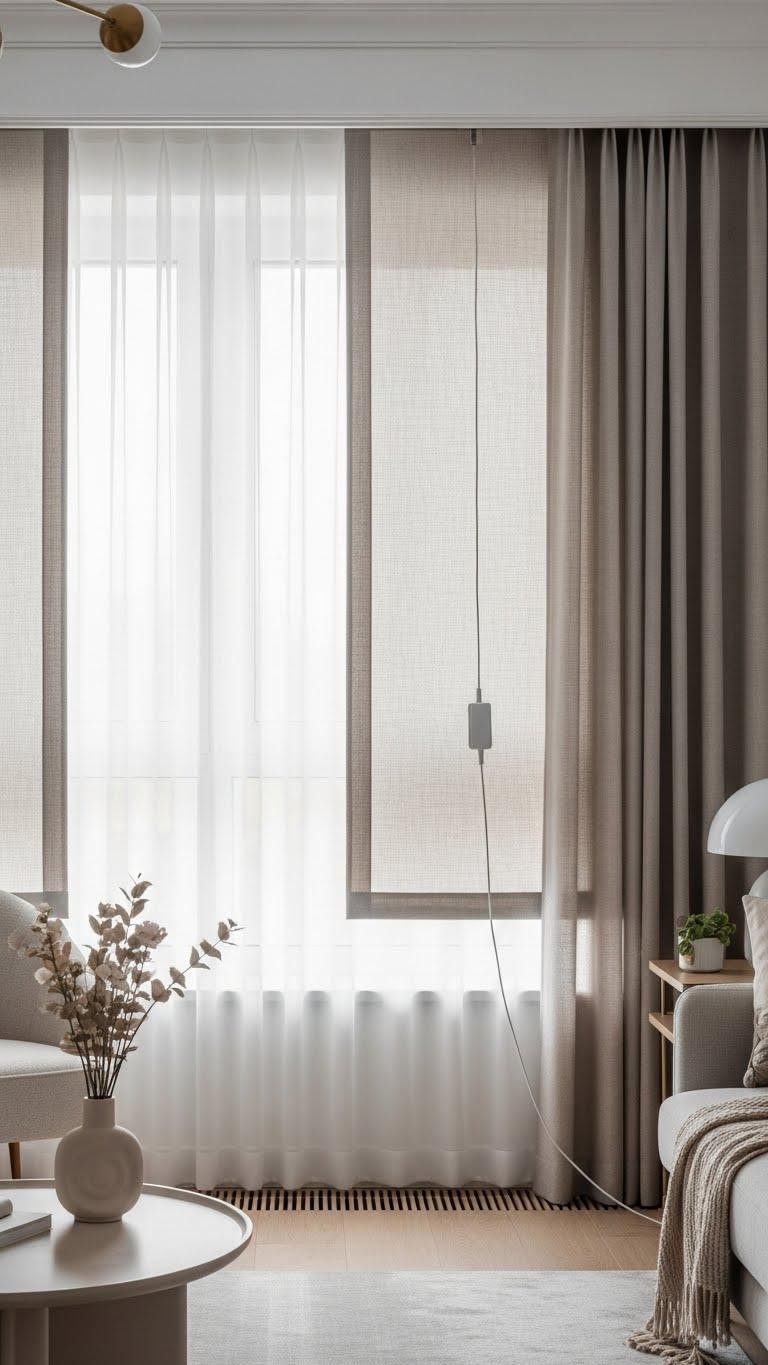
Bathed in gentle fabric, your windows become the room’s quietest luxury—sheer curtains, linen panels, or layered voiles diffuse light and round out hard lines so everything feels calmer and more intentional.
Choose thermal blackout liners for sound and temperature control, and opt for corded motorization when you want effortless privacy and freedom of movement.
Keep tones soft and finishes minimal for serene cohesion.
Add Layered Rugs for Warmth and Depth
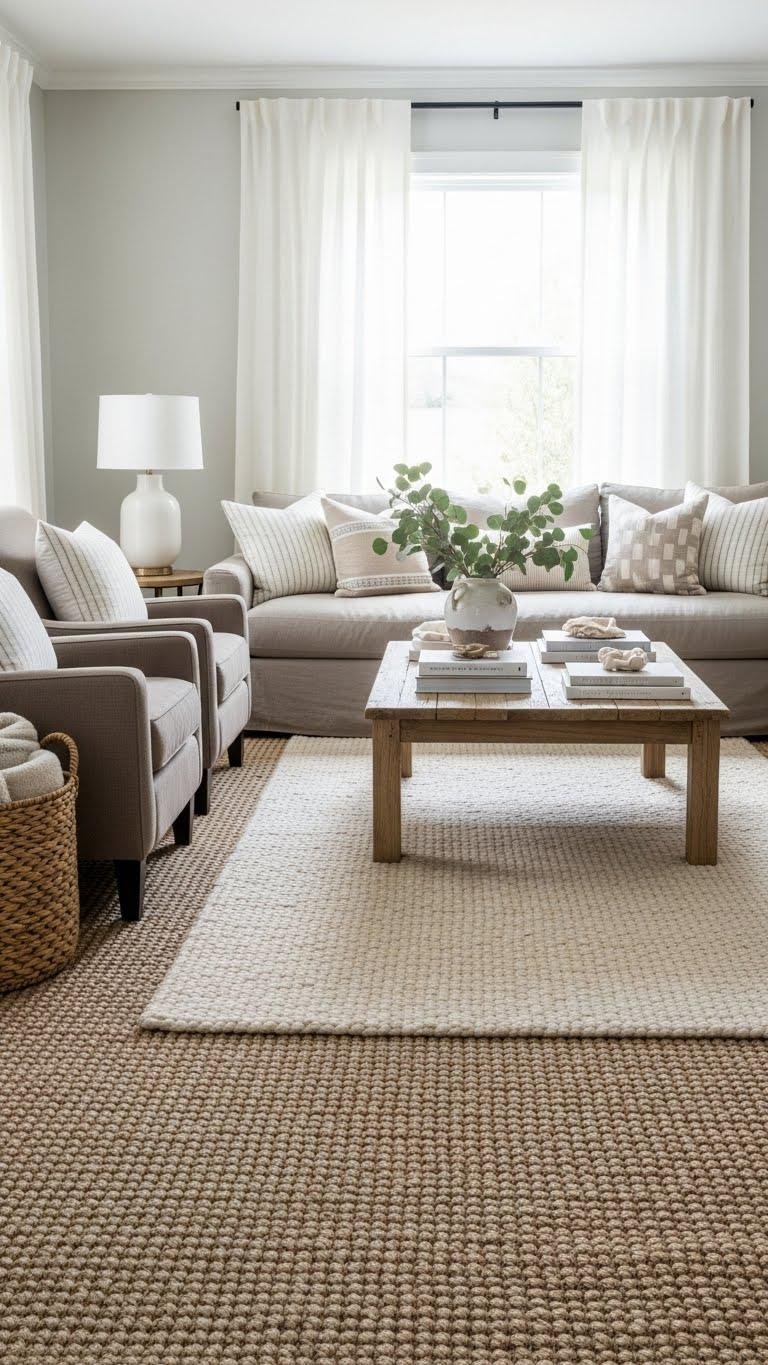
Often, layering rugs is the quickest way to introduce warmth and visual depth to a living room—place a textured sisal or jute base for grounding, then add a softer wool or low-pile rug centered under the seating area to define the conversation zone.
You’ll experiment with layered textures and confident rug placement, blending scale, pattern, and neutral tones so the room feels open, calm, and freely styled.
Incorporate Textured Accessories and Baskets
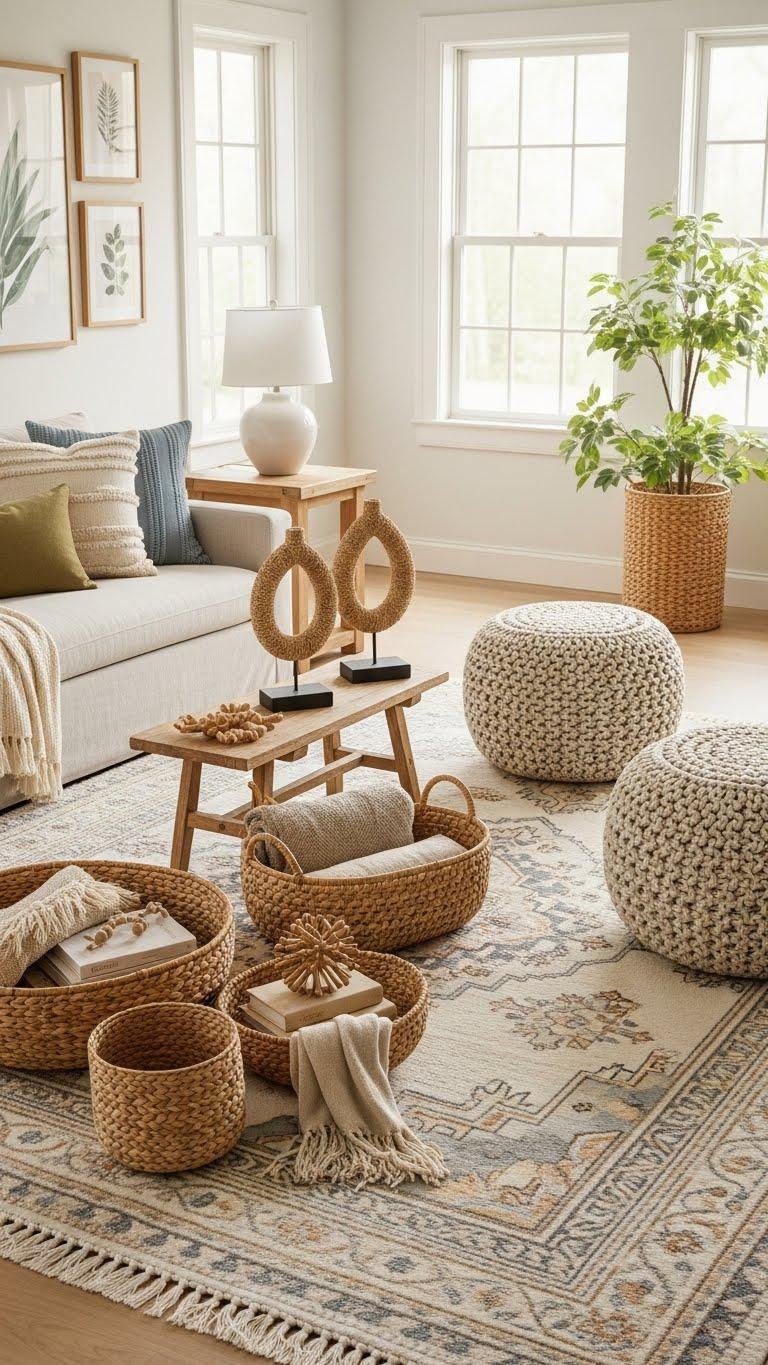
Once your rugs have set the stage, bring in textured accessories and baskets to amplify warmth and visual interest without crowding the space.
You’ll place woven ottomans as flexible seating, tuck baskets for tidy storage, and add seagrass sculptures as sculptural anchors.
Choose muted tones and varied weaves to keep the room airy, tactile, and effortlessly open to movement and light.
Swap Seasonal Throws and Richer Tones in Cooler Months
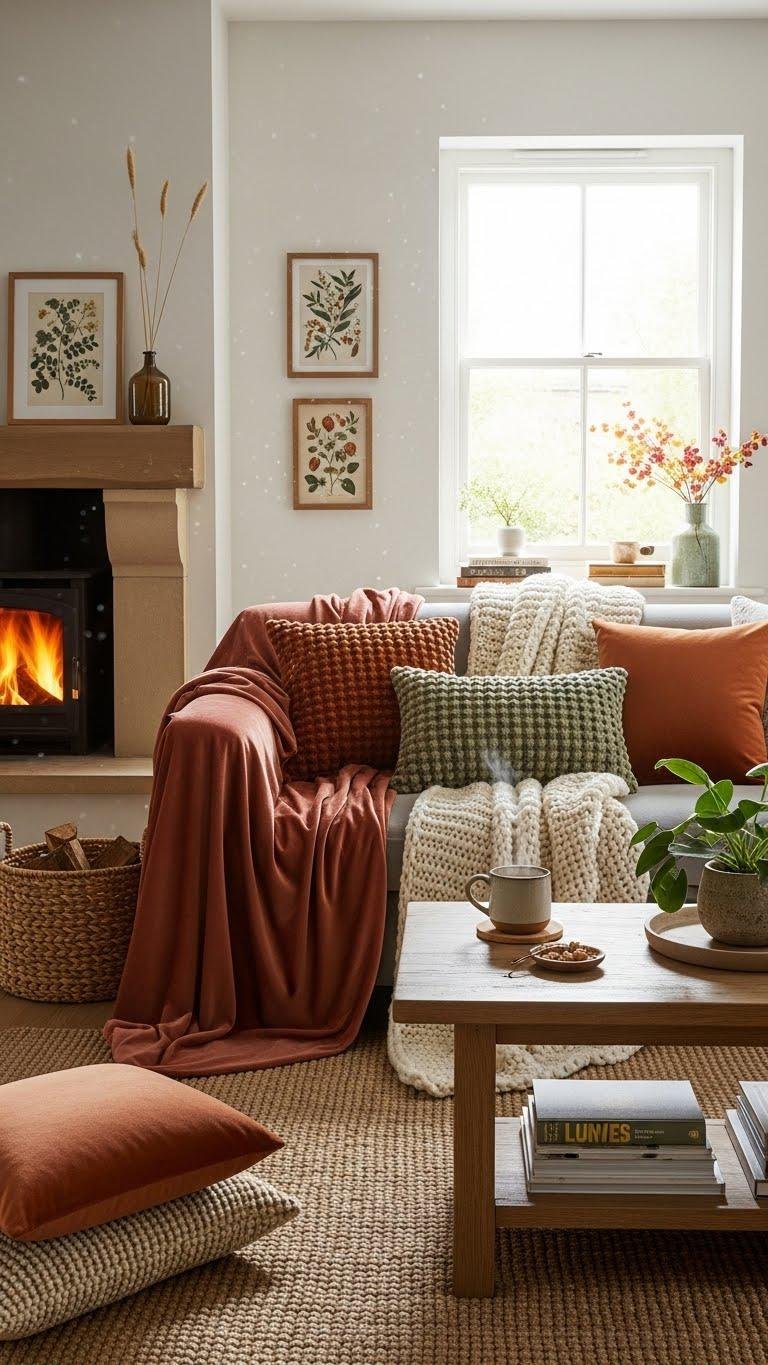
As the days cool, swap out lightweight linens for plush throws and introduce richer tones to lend the room instant warmth and depth. You’ll curate seasonal textiles—velvet, wool, boucle—layered casually over sofas and chairs. Gentle color rotation, from muted sage to deep terracotta, refreshes mood without clutter. Keep patterns restrained and textures varied so your space stays calm, open, and free.
Include Low-Profile Storage to Maintain Calm
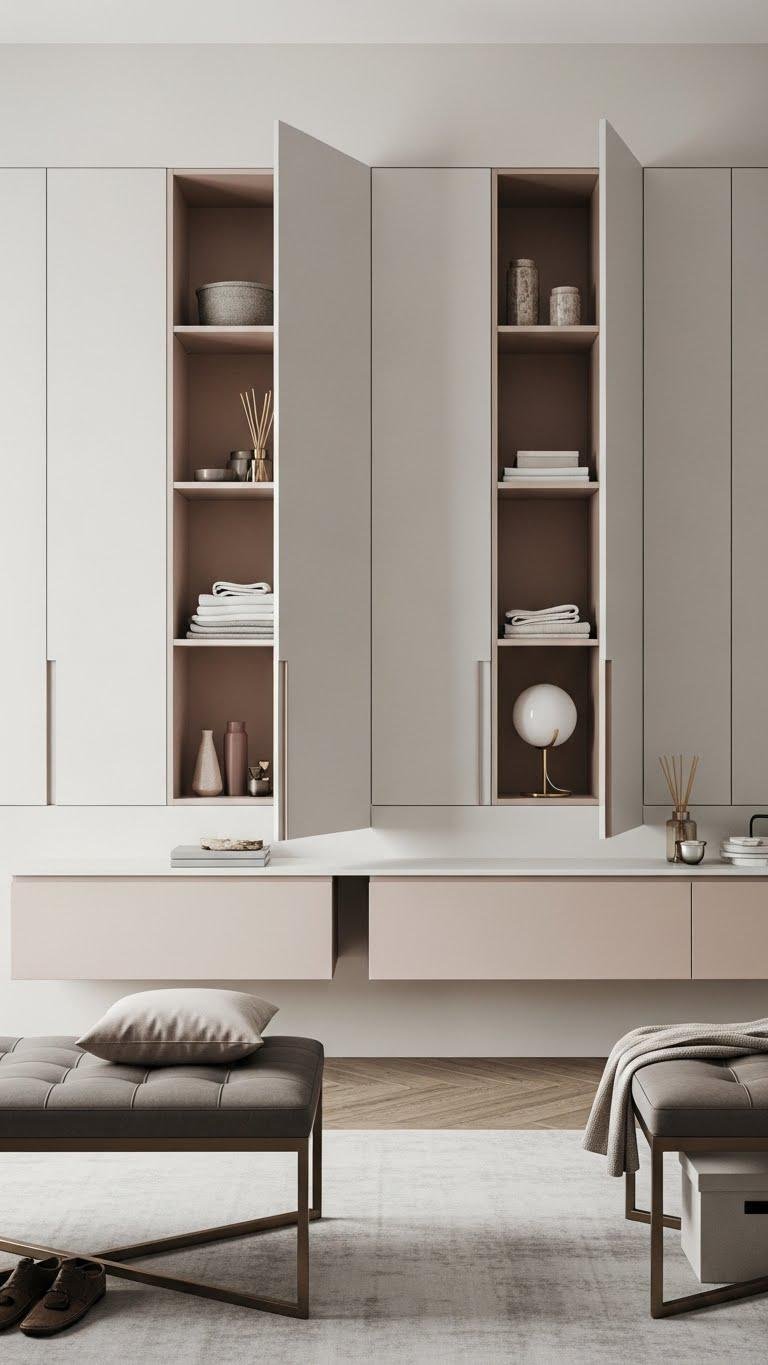
Keep clutter tucked away with low-profile storage that preserves your room’s open, calming silhouette. You’ll choose hidden cabinetry and recessed shelving to keep surfaces bare and sightlines clean, pairing slender benches or floating consoles with soft finishes. These solutions free your movement, simplify cleaning, and let textures and light become focal points without visual noise, sustaining a relaxed, liberated atmosphere.