
You can make a small living room feel much larger without a full reno by using light-reflective paints, streamlined furniture, and smart storage to open sightlines and improve flow. Think sheer floor-to-ceiling curtains, low-profile seating with open bases, vertical storage, and layered rugs to define zones. I’ll show practical swaps and styling tricks that create depth, height, and airy circulation—so you can pick the changes that fit your space and budget.
Paint Walls and Ceilings in Light Reflective Colors

Choosing light-reflective colors for your walls and ceiling instantly opens up a small living room, so lean into soft whites, pale grays, warm beiges, or muted pastels that bounce daylight and make corners recede.
You’ll amplify space by priming with a reflective primer, choosing matte or subtle pearlescent finish, and pairing streamlined furnishings and airy textiles for a liberated, modern vibe.
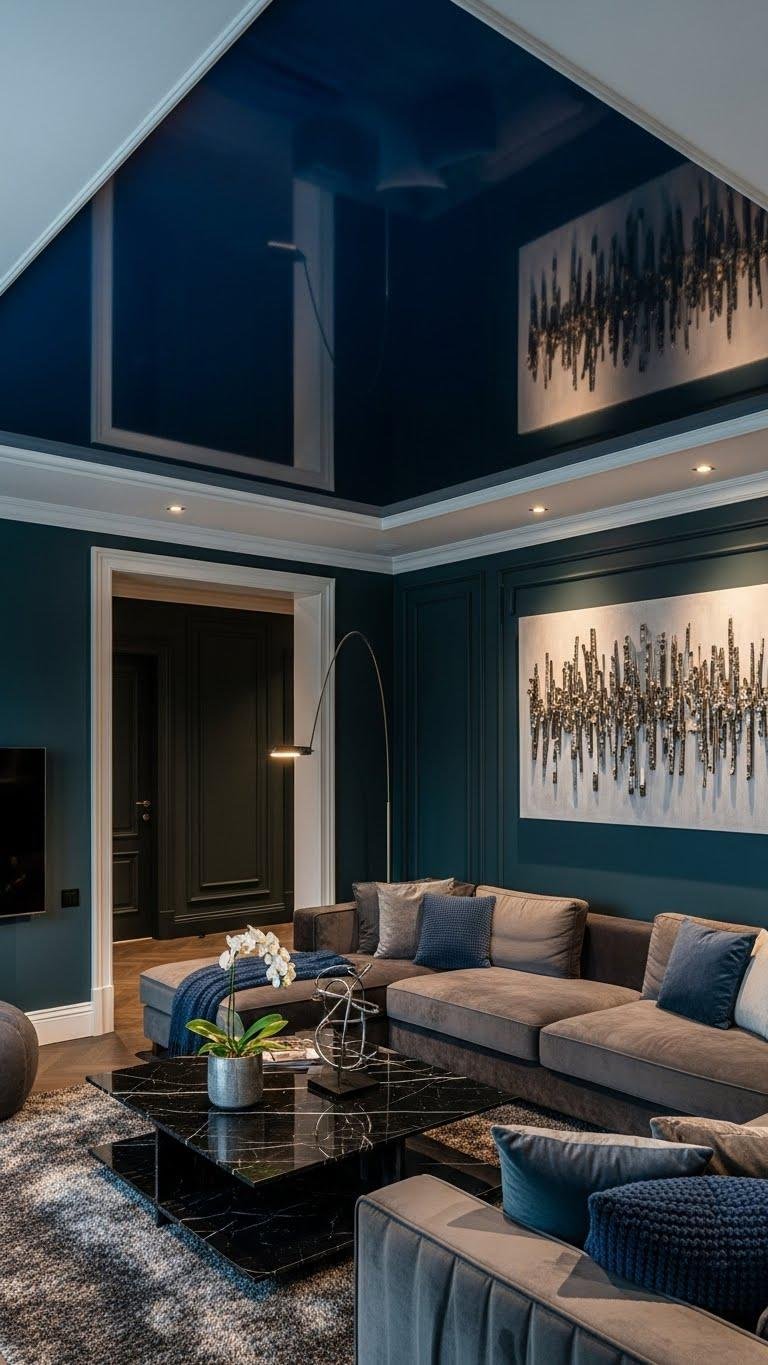
Use Glossy or Deep-Colored Ceilings for Depth
Install Sheer Cream or Beige Curtains
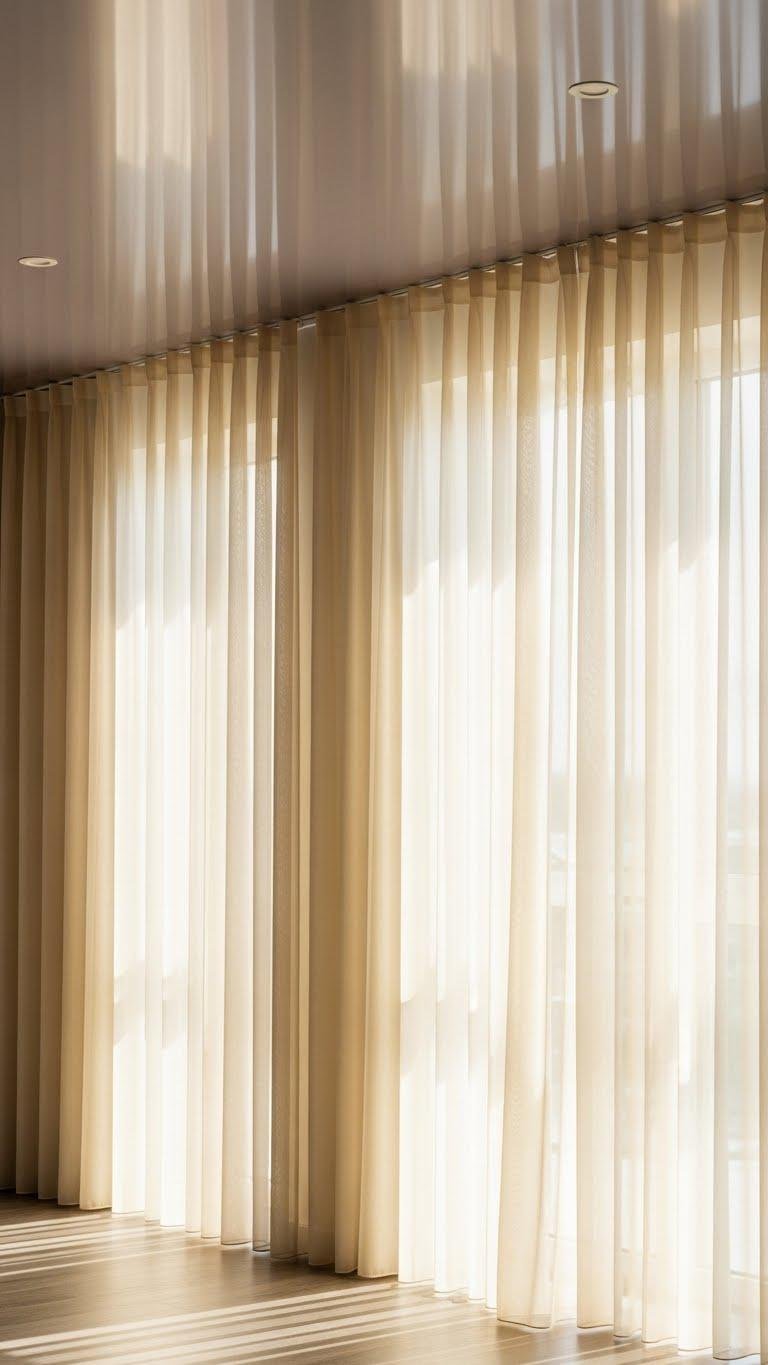
After the drama of a glossy, deep-toned ceiling, lighten the mood with sheer cream or beige curtains that soften light and widen the room visually.
You’ll choose light filtering textiles in neutral tones to keep views airy, maintain privacy, and let sunlight breathe.
Hang curtains close to the ceiling and let them graze the floor for a liberated, seamless look that feels larger and calm.
Choose Vertical-Striped Fabrics to Add Height
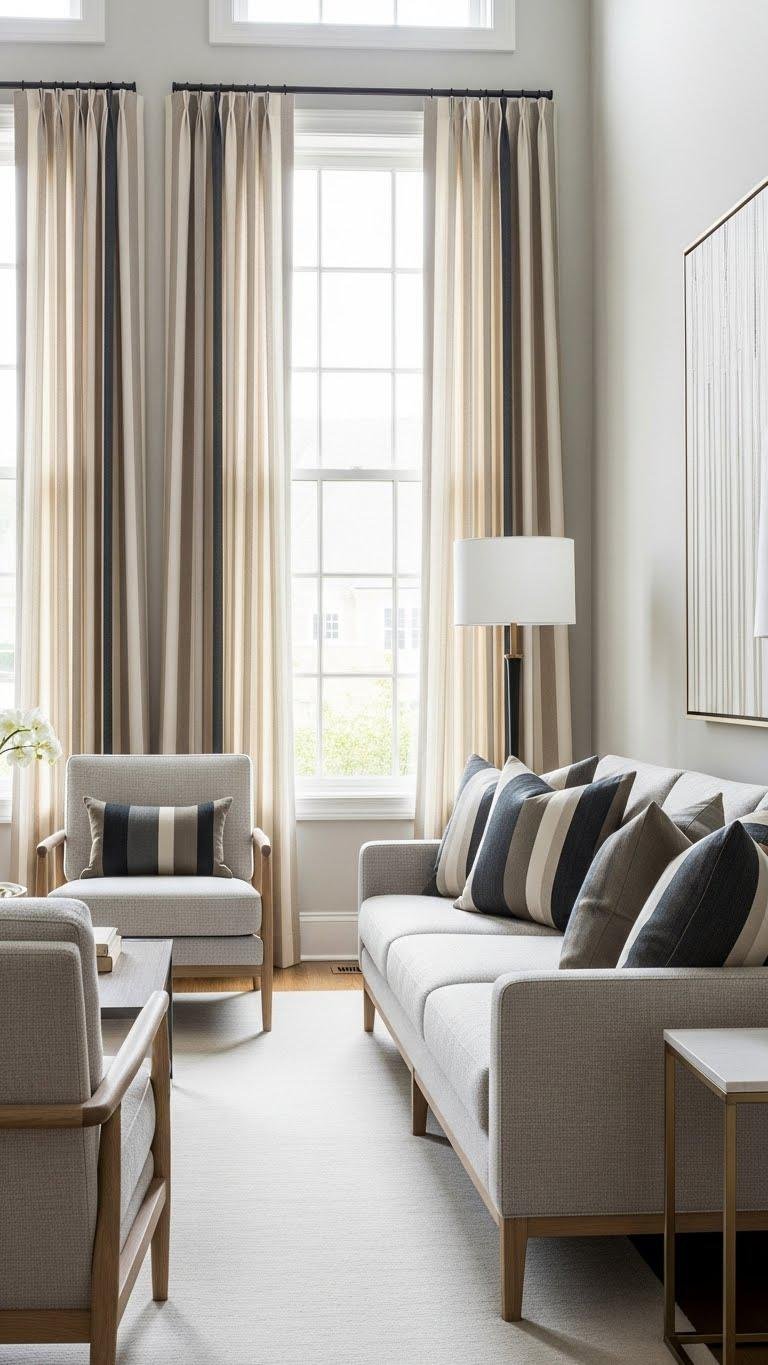
If you want to make ceilings feel higher, pick vertical-striped fabrics for curtains, upholstery, or throw pillows — the eye follows the lines upward, instantly elongating the room. Choose clean vertical upholstery in neutral tones and pair it with bold striped drapery for contrast.
You’ll create a liberated, airy vibe that reads taller, modern, and intentional without crowding your small living space.
Balance Horizontal Stripes to Widen the Room
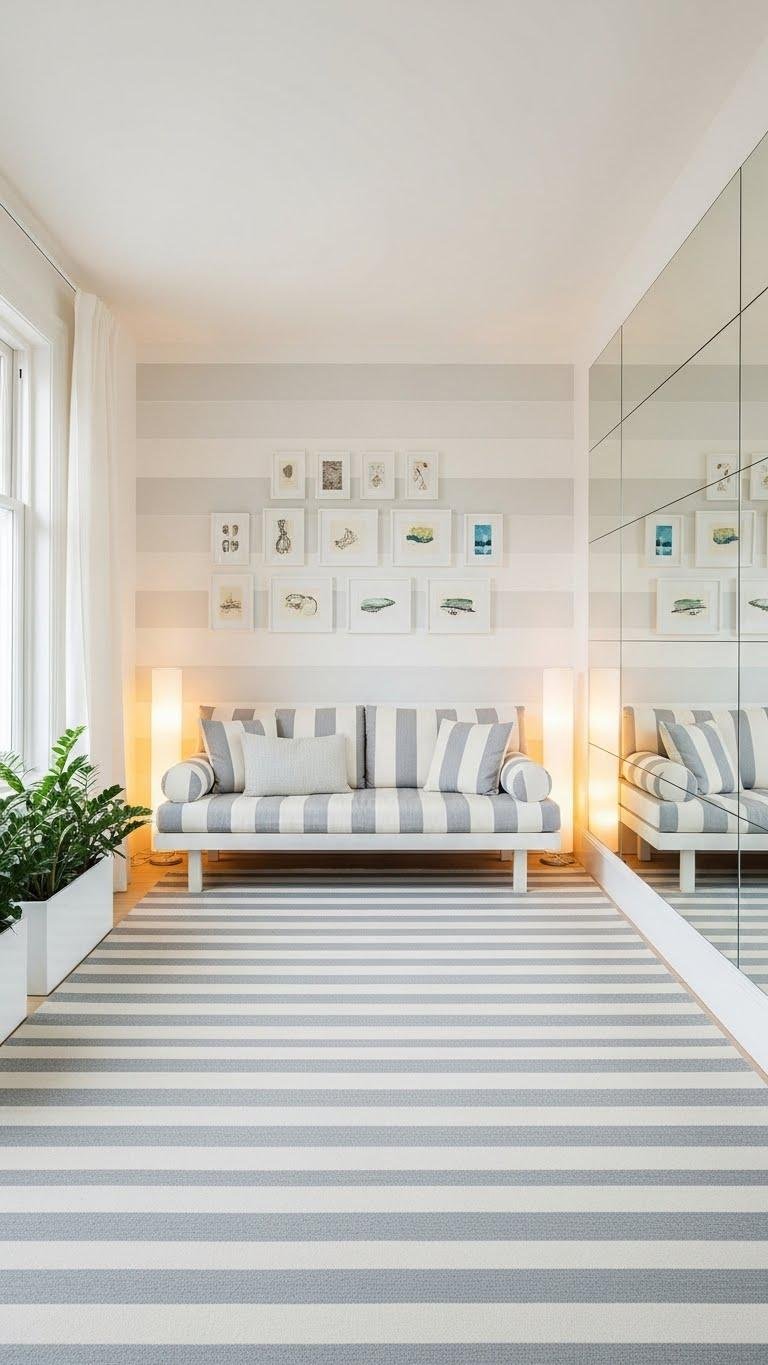
Because horizontal stripes draw the eye side to side, they’re your go-to tool for making a narrow living room feel wider; use them sparingly on a low-slung sofa, a rug, or a single accent wall to broaden the visual field without overwhelming the space.
Pair with strategic mirror placement and careful artwork alignment to amplify width, keep a light palette, and maintain an airy, liberated vibe.
Mount Floating Furniture to Free Floor Space

To keep that airy, widened feel, mount floating furniture to free up floor space and reinforce visual flow. You’ll love how floating consoles lift storage off the ground, guiding sightlines and making cleaning effortless.
Choose sleek, cantilevered pieces and wall mounted ottomans for seating that tucks away. This frees movement, simplifies layouts, and creates a light, liberated small living room vibe.
Select Multi-Functional Pieces With Hidden Storage

When space is tight, pick furniture that pulls double duty—think coffee tables with lift tops, sofas with under-seat drawers, and ottomans that hide blankets and remotes—so storage disappears without adding bulk.
Choose hidden ottomans for seating and stowage, sleek convertible benches that double as luggage-friendly shelving, and streamlined consoles.
You’ll gain calm, mobile rooms that feel open and unclaimed.
Opt for Open, Daybed-Style Sofas to Preserve Sightlines
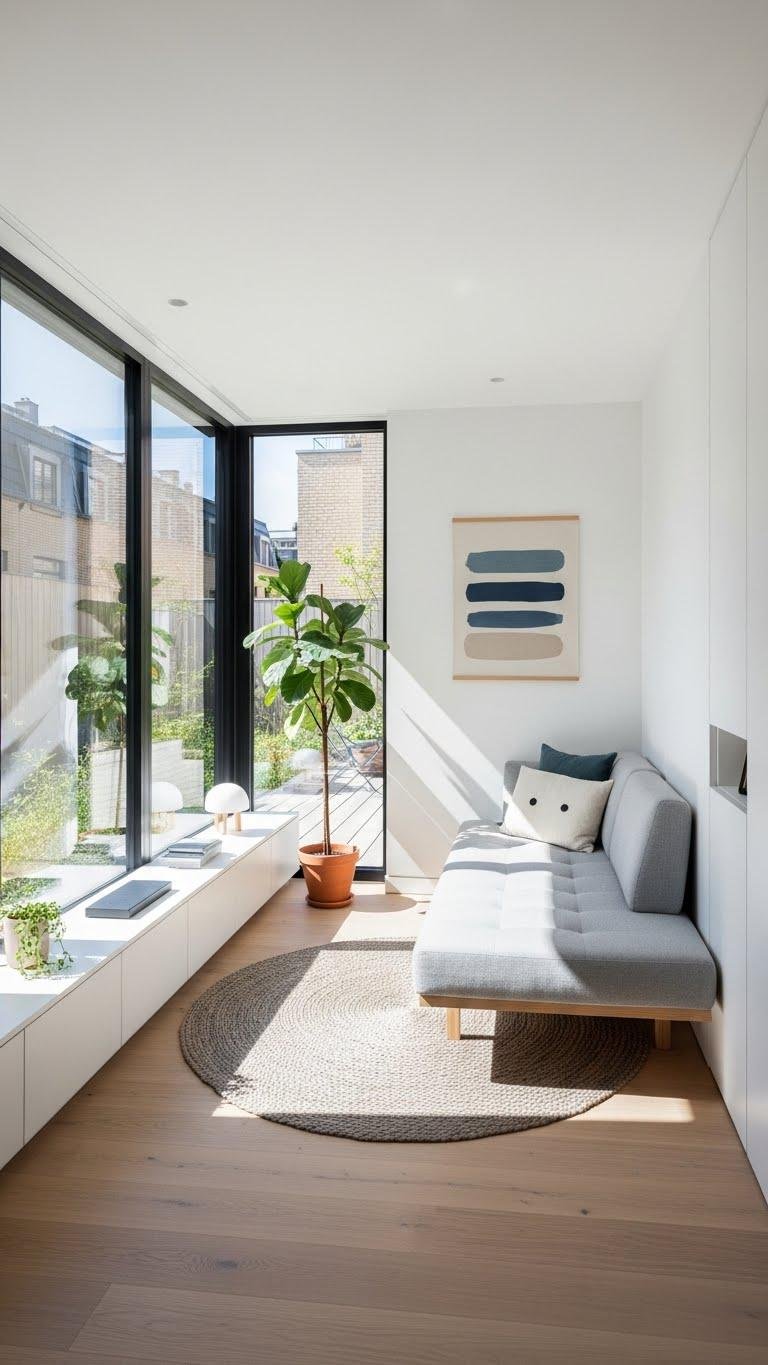
You’ve made smart choices with hidden-storage pieces; now keep that open feeling by choosing daybed-style sofas that preserve sightlines and breathe life into a small room.
Opt for low-profile frames and strategic daybed placement against a wall or floating parallel to windows. This uncluttered layout boosts sightline preservation, invites natural light, and gives you airy, unfettered movement.
Pick Smaller, Sleek Coffee and Side Tables

Lean into slim silhouettes and low profiles to keep traffic flowing and sightlines unobstructed—pick coffee and side tables with tapered legs, glass tops, or open bases so the room feels airy, not crowded.
Choose space saving tables that tuck easily beside seating, or transparent acrylics to vanish visually.
Opt for round or nesting shapes to maximize movement and keep the layout flexible and free.
Embrace Minimalist Nordic-Style Seating

Because clean lines and natural materials make small rooms feel calmer, choose Nordic-style seating that’s pared-back and purposeful. You’ll pick slim-profile sofas or lounge chairs that free movement, layer Scandinavian textiles for warmth, and keep color muted to open sightlines.
Opt for Hygge seating with simple wooden frames and soft throws so your space feels airy, cozy, and effortlessly liberated.
Add Floating Shelves and Tall Bookcases
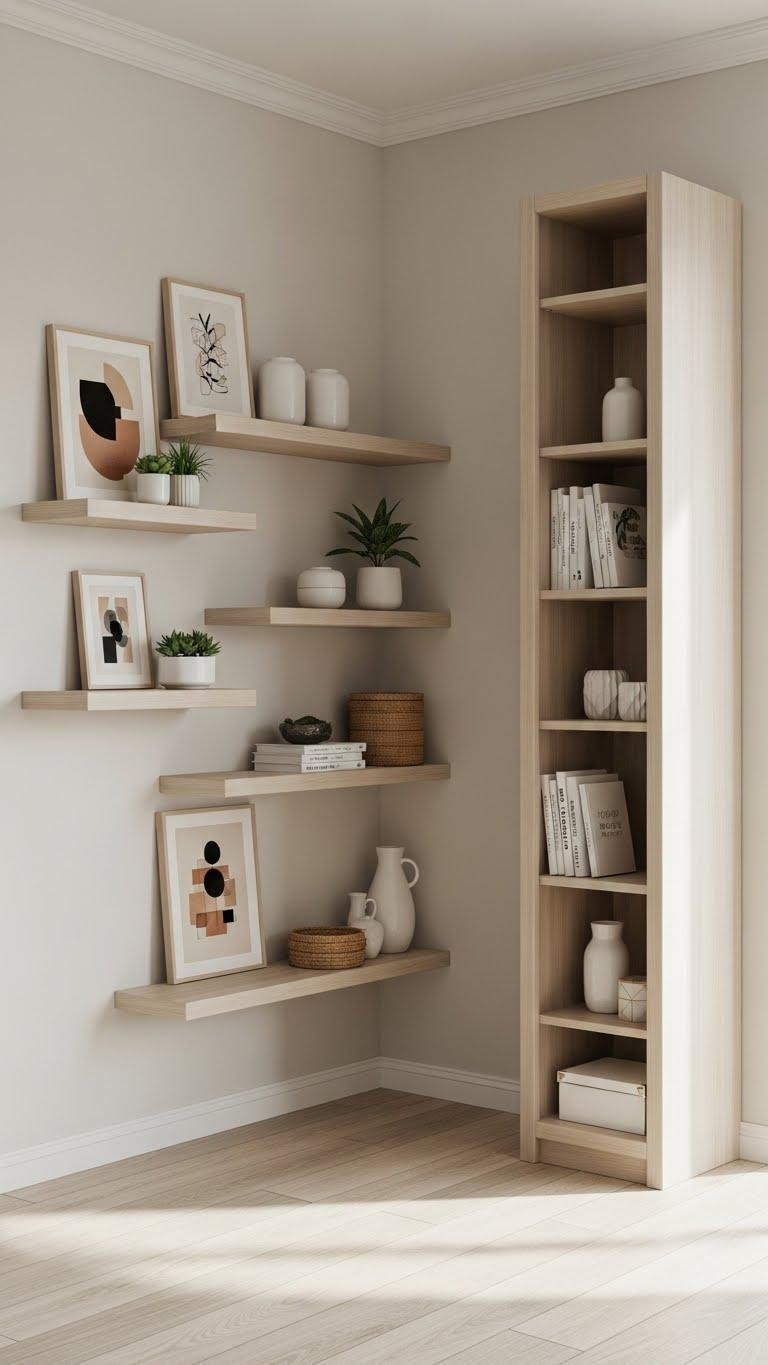
Maximize vertical space by installing floating shelves and a tall bookcase to draw the eye upward and free up floor area.
You’ll create an airy, liberated vibe by mixing corner ledges with staggered heights, showcasing art, plants, and essentials without cluttering pathways.
Choose slim profiles, light finishes, and open-backed units so your room feels taller and movement stays effortless.
Use Shelves Above Windows for Extra Display
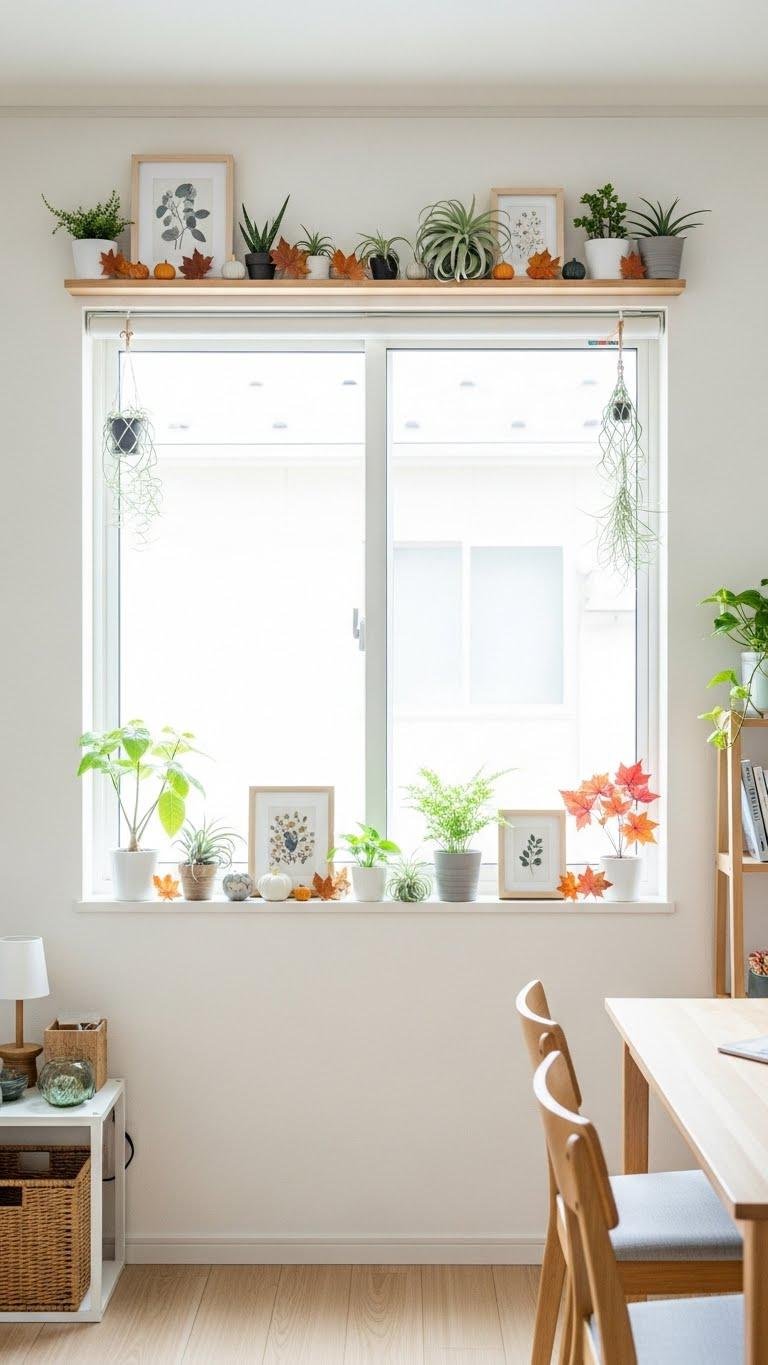
Tuck a slim shelf above your window to gain instant display space without eating into your floor plan; it’s a chic spot for plants, small art, or seasonal decor that draws the eye up and lengthens the room.
You’ll create airy vertical interest, experiment with seasonal styling, and keep plant safety in mind—secure pots, avoid drafts, and choose lightweight pieces that feel liberating.
Incorporate Over-Door Storage Solutions
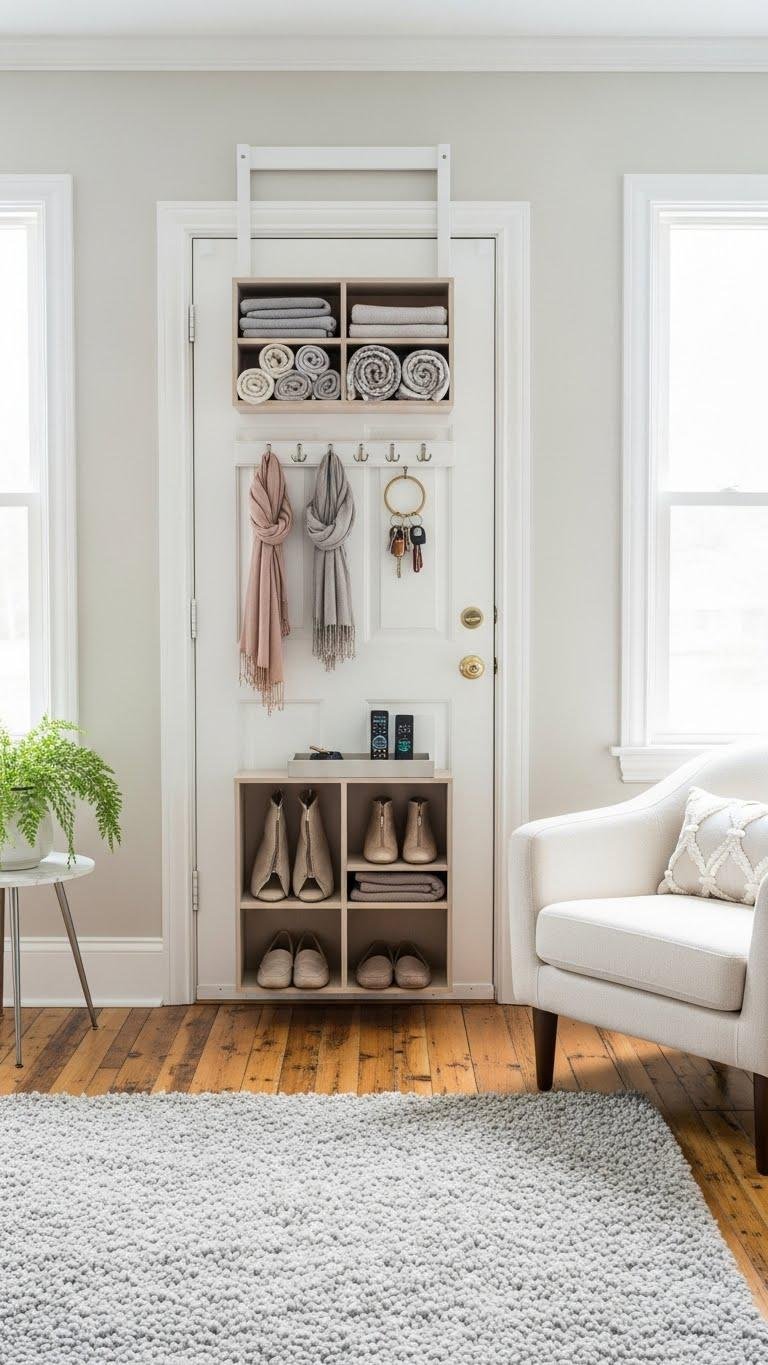
Swing open possibilities with over-door storage that keeps essentials off the floor and out of sight while adding polished, vertical interest to a small living room.
Choose a slim over door organizer or sleek shoe rack to corral sneakers, remotes, and blankets. A minimalist hanger ledger holds scarves and keys.
You’ll reclaim floor space, simplify visuals, and move freely through a tidy, airy room.
Install Wall-Mounted Folding Tables or Desks

If you’ve cleared floor clutter with over-door organizers, wall-mounted folding tables let you reclaim horizontal space without losing function.
You’ll mount streamlined, trend-forward pieces that drop down for coffee, crafting, or laptop tasks. These space saving surfaces convert walls into compact workstations, freeing floor room and visual weight. Fold them away to restore open flow—freedom-focused, practical, and stylish.
Design Built-In Storage and Corner Cabinets
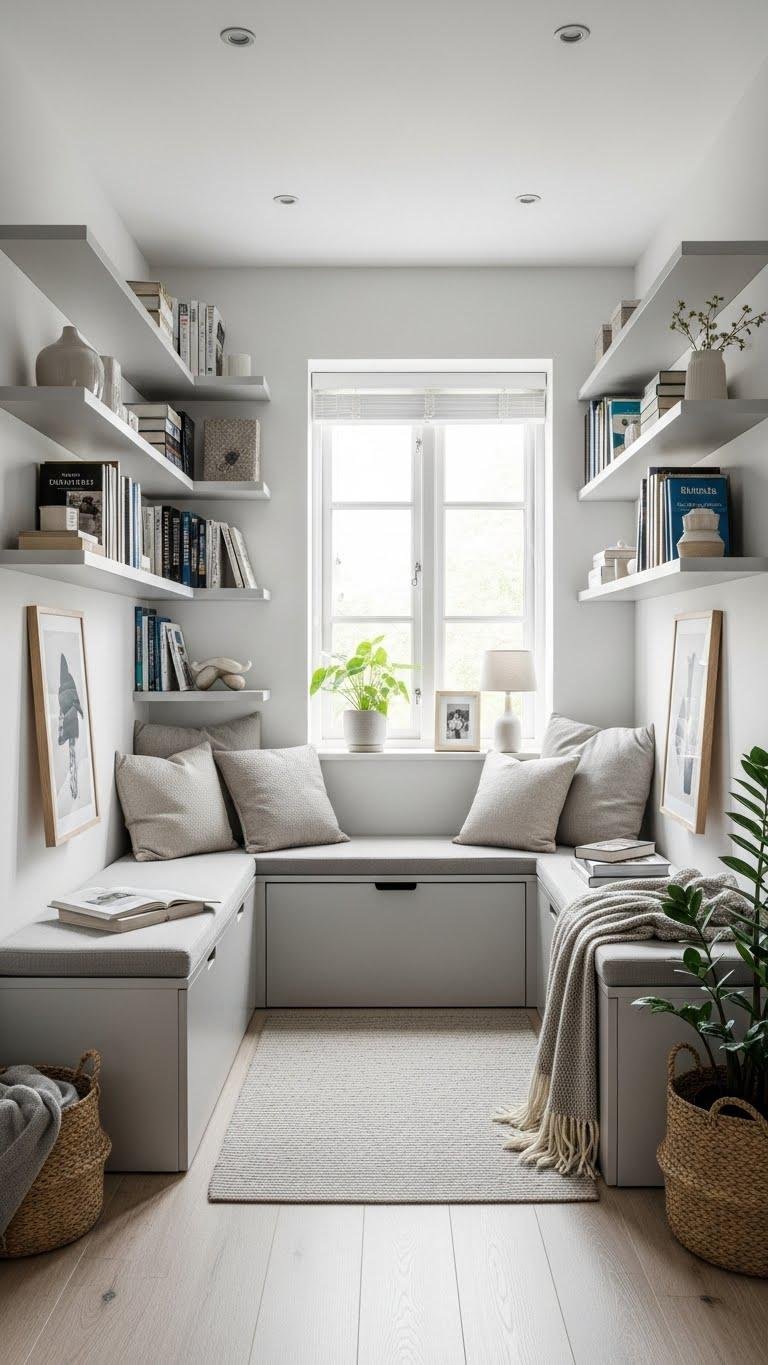
Built-ins and corner cabinets make your small living room feel tailored, not cramped — they turn awkward nooks into polished storage that plays up the room’s lines.
Use low-profile built in benches with hidden drawers for seating and stash, add floating shelves and corner bookshelves to lift the eye.
Choose pale finishes, slim hardware, and multipurpose doors so you keep space open and free.
Stencil a Cozy Reading Corner With Subtle Patterns
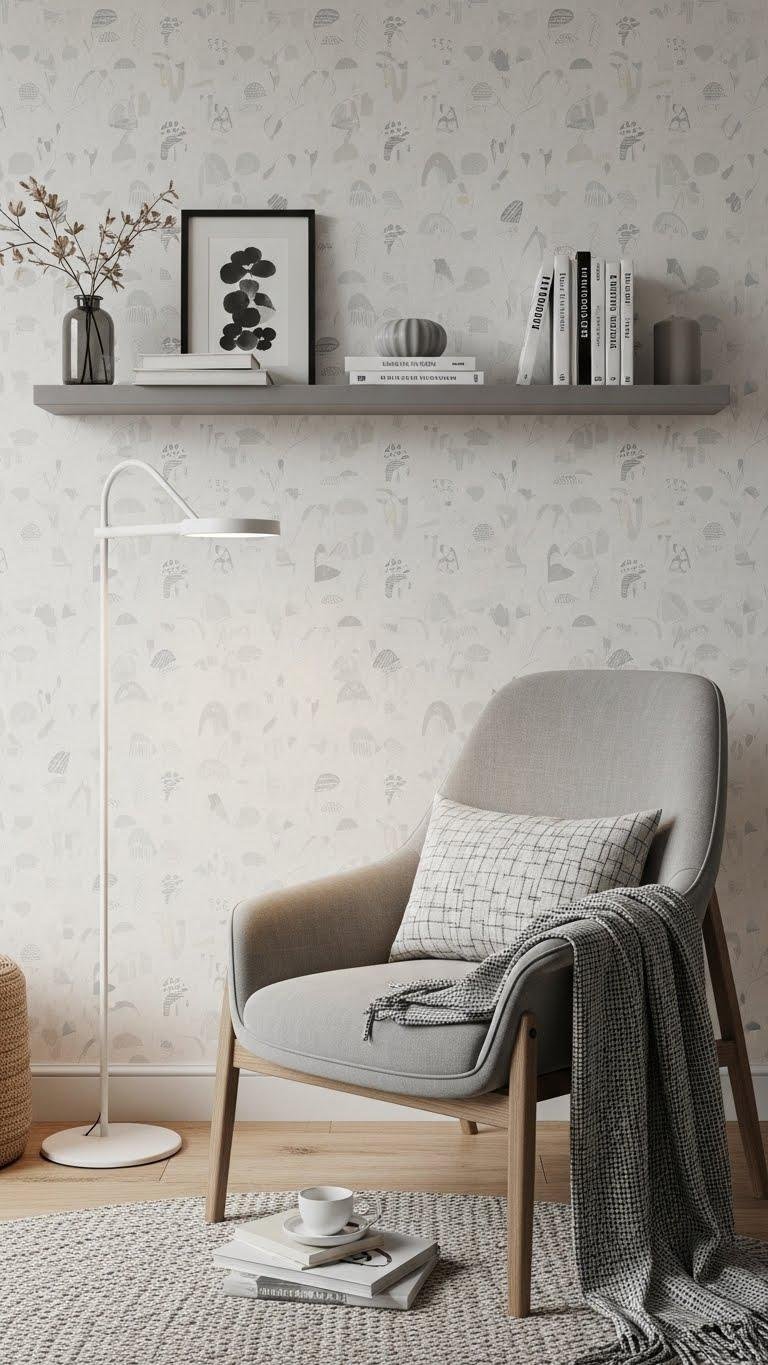
After fitting storage into corners, carve out a tiny reading nook by stenciling a subtle pattern on the wall behind your chair to add texture without clutter.
Choose calm hues and minimal motifs so pattern placement feels intentional, not busy.
Add a slim lamp, a floating shelf, and a cozy throw so your reading nook breathes—functional, airy, and ready for spontaneous escape.
Create a Light, Porcelain-Toned Statement Wall
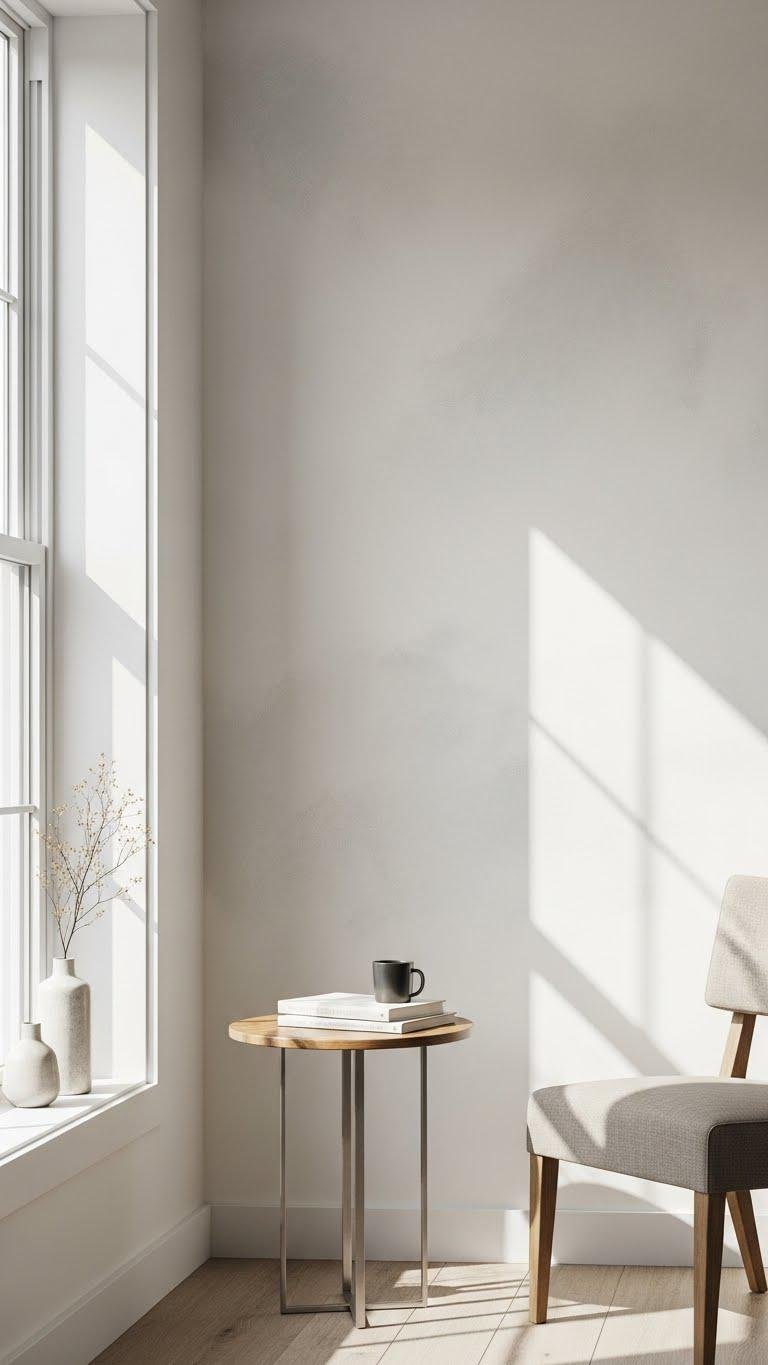
Paint a single wall in a soft porcelain tone to instantly lift the room and create a subtle focal point that feels fresh and airy.
You’ll celebrate porcelain texture with matte finish and gentle brushwork, giving depth without weight.
Keep furnishings minimal, add warm wood and metal accents for soft contrast, and let light roam free so the small space feels open and intentionally calm.
Layer Blue Patterns for a Jewel-Box Accent
Match Greenery to Light Wall Tones for Warmth
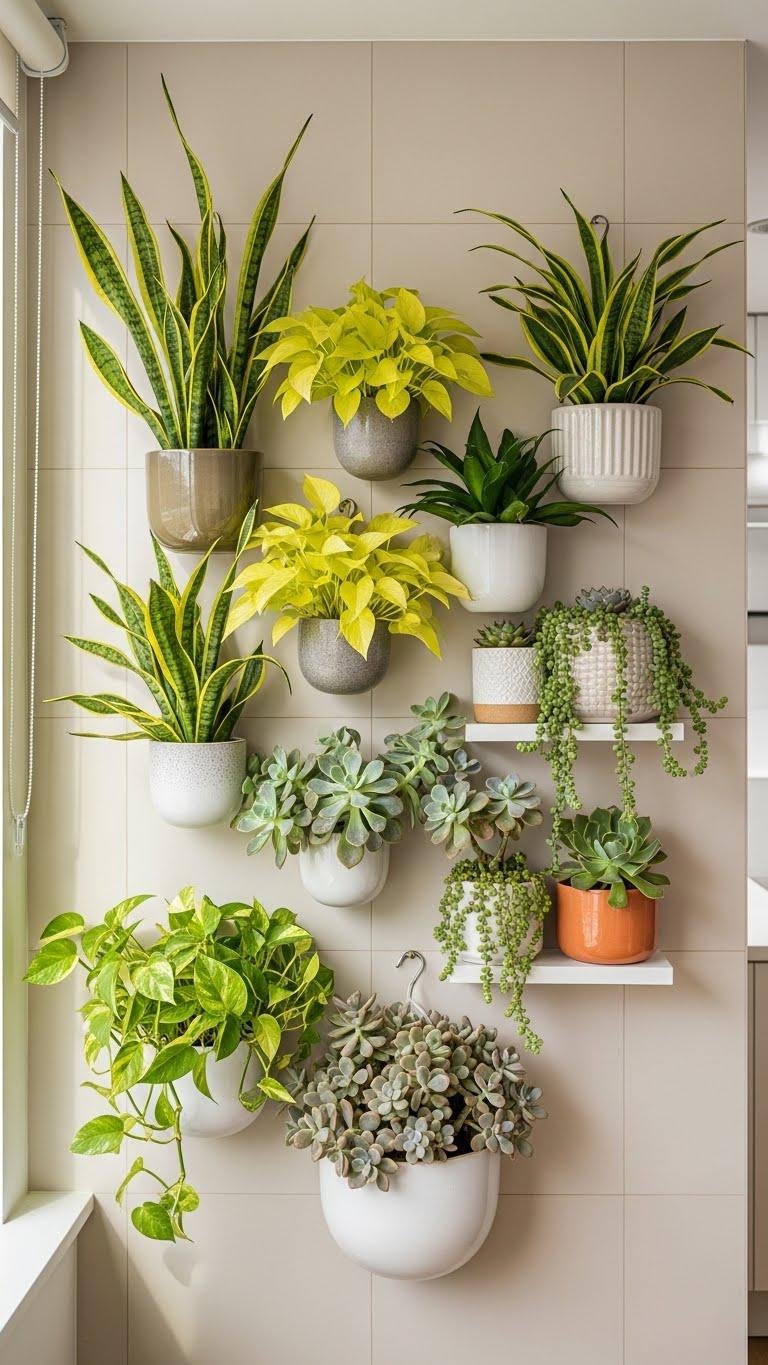
Against a pale, porcelain wall, pick plants with warm undertones—olive, chartreuse, or soft sage—to make the room feel intentionally cozy.
You’ll choose drought tolerant options like snake plants or succulents that suit easy living. Vary leaf shapes and pot textures for subtle texture contrast, creating a layered, airy vibe that feels liberated and polished without clutter.
Layer Rugs, Curtains, and Dividers to Define Zones

When you layer rugs, curtains, and lightweight dividers, you can carve out clearly defined zones in a small living room without building walls.
Embrace rug zoning to anchor seating and a workspace, then use curtain layering for soft separation that still breathes.
Lightweight screens or hanging panels add portable privacy.
The result feels open, intentional, and utterly free — stylishly modular.
Use Strategic Lighting With Wood-Effect Accents
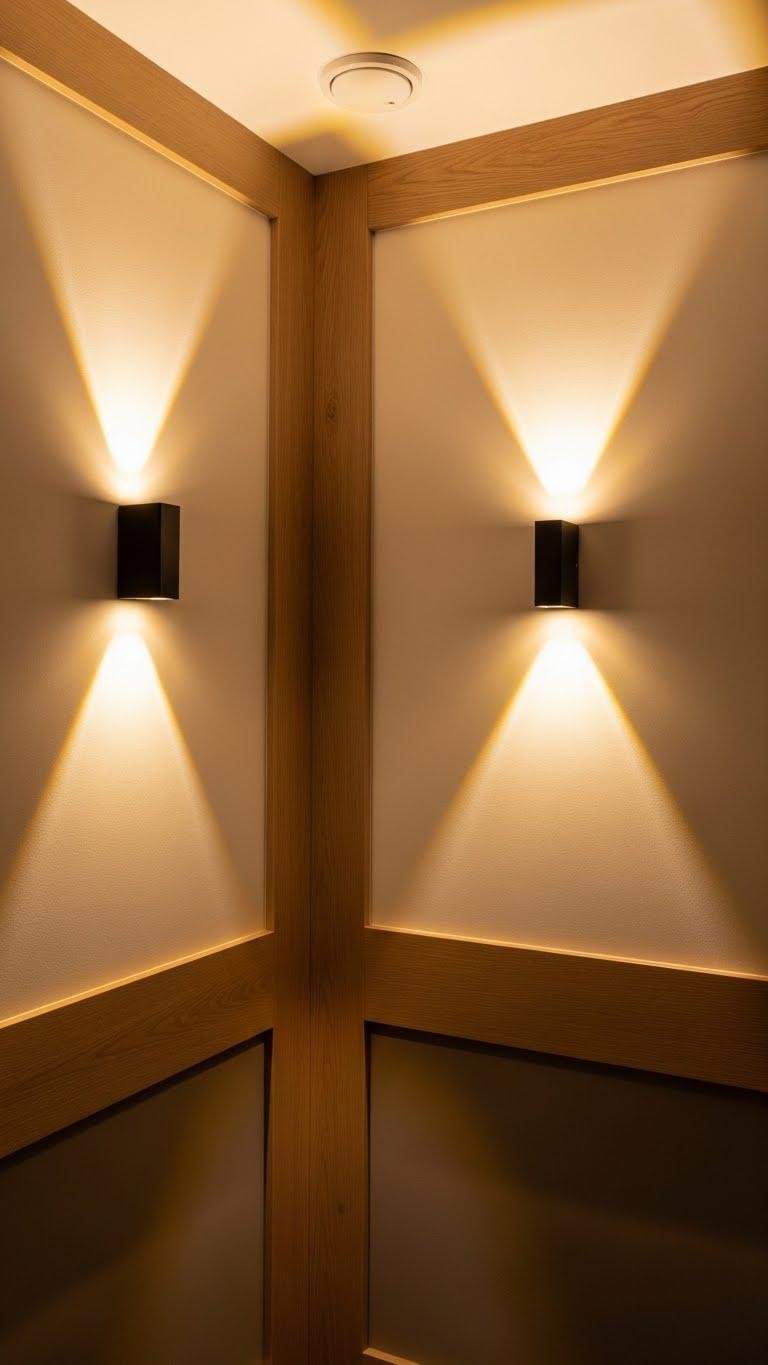
Although small rooms need careful planning, you can instantly add warmth and depth by pairing strategic lighting with wood-effect accents.
Use ambient positioning to wash walls and highlight timber trims, placing slim wall sconces and recessed LEDs to stretch visual space. Choose matte wood tones and directional beams that create horizons and pockets of calm, so you feel free and unfettered in a compact room.
Start With Scaled Bird’s-Eye Mock-Ups to Plan Flow
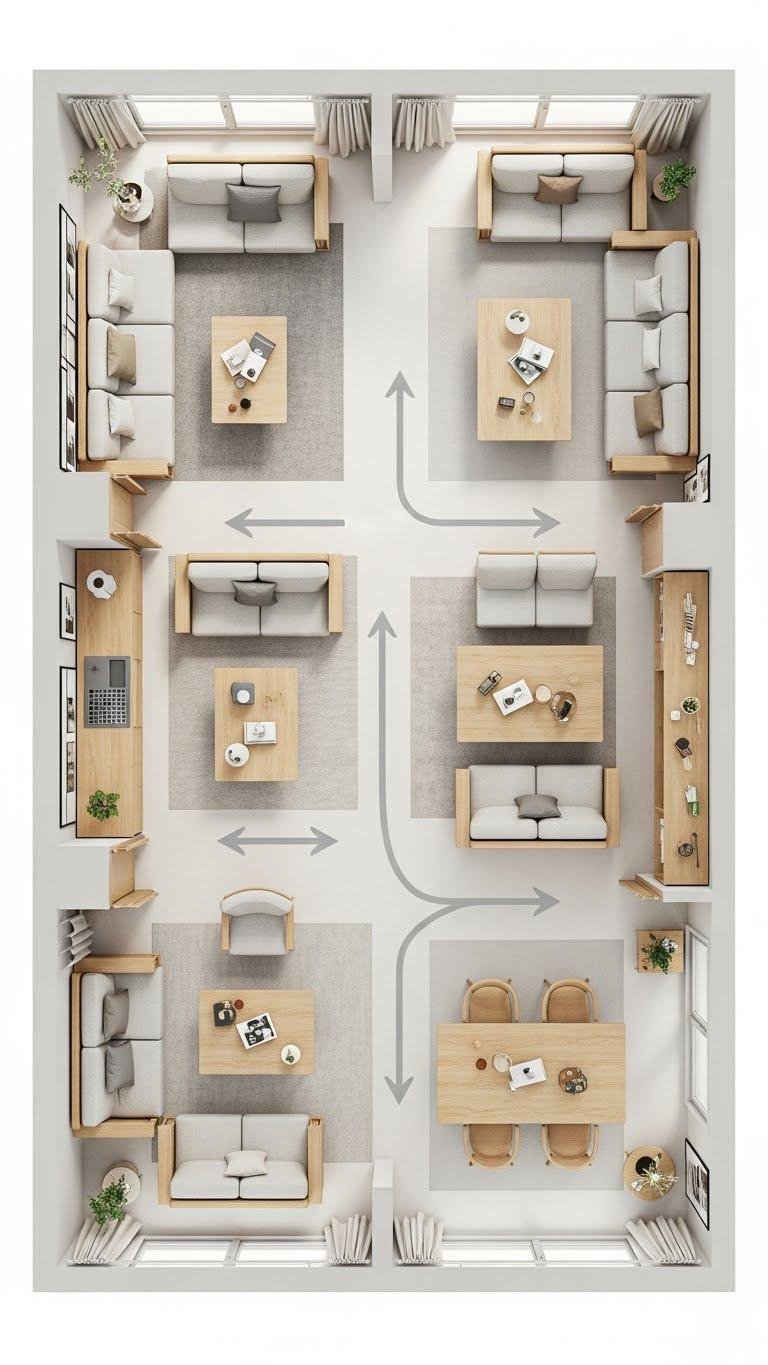
Kick things off with a scaled bird’s‑eye mock‑up so you can see how furniture, traffic paths, and sightlines actually work together.
You’ll run quick scale studies and sketch flow diagrams to test layouts, then swap pieces until movement feels effortless.
This visual, minimalist work lets you claim spatial freedom, keep sightlines open, and choose multiuse furniture that stretches every square foot.