
You’ll find ways to calm a room with warm beiges, soft taupes, and tactile layers—linen, wool, jute, matte plaster—and a few deep accents like forest green or amethyst to anchor the eye. Think low-profile sofas, sculptural chairs, reclaimed wood, and matte-metal details that define space without clutter. These ideas pare back ornament and focus on material, light, and circulation—enough to start rethinking your living room’s form and feel.
Calming Beige and Warm Brown Living Room
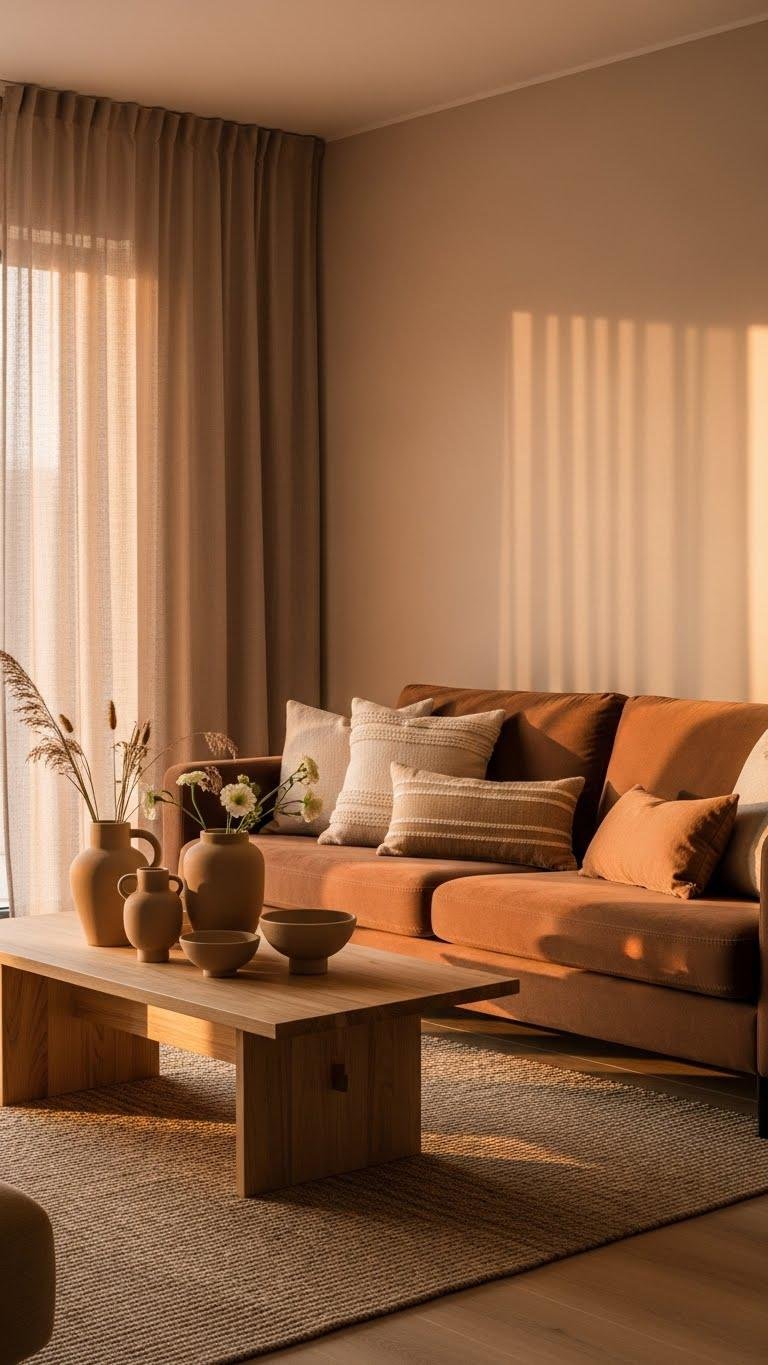
When you layer warm browns over soft beiges, the room feels both grounded and airy. You’ll choose sunset beige walls, textured linens, and a velvety mocha sofa that invites lounging. Natural wood, matte ceramics, and linen curtains keep things tactile and calm. You’ll move freely in uncluttered space, letting light and material speak, creating a serene, unconfined living area.
Deep Green Accent in a Neutral Scheme

Bring in deep green to anchor a neutral palette and you’ll give the room a vivid, grounding focal point without overwhelming its quiet elegance.
Choose deep forest upholstery on a streamlined sofa, pair it with warm oak and green veneer cabinetry for subtle contrast, and add matte brass hardware.
You’ll keep lines clean, materials honest, and the space free, grounded, and confidently modern.
Layered Linen and Wool Textured Space

Layer soft linen throws over a low-profile wool sofa to create tactile contrast that reads both relaxed and refined. You’ll embrace linen layering with neutral palettes, mixing natural folds and muted tones.
Let wool texture anchor the room while lightweight linens flutter, inviting movement and ease. Choose raw edges, simple palettes, and tactile rugs so your space feels open, calm, and liberated.
Low-Profile Sofa With Curved Accent Chairs
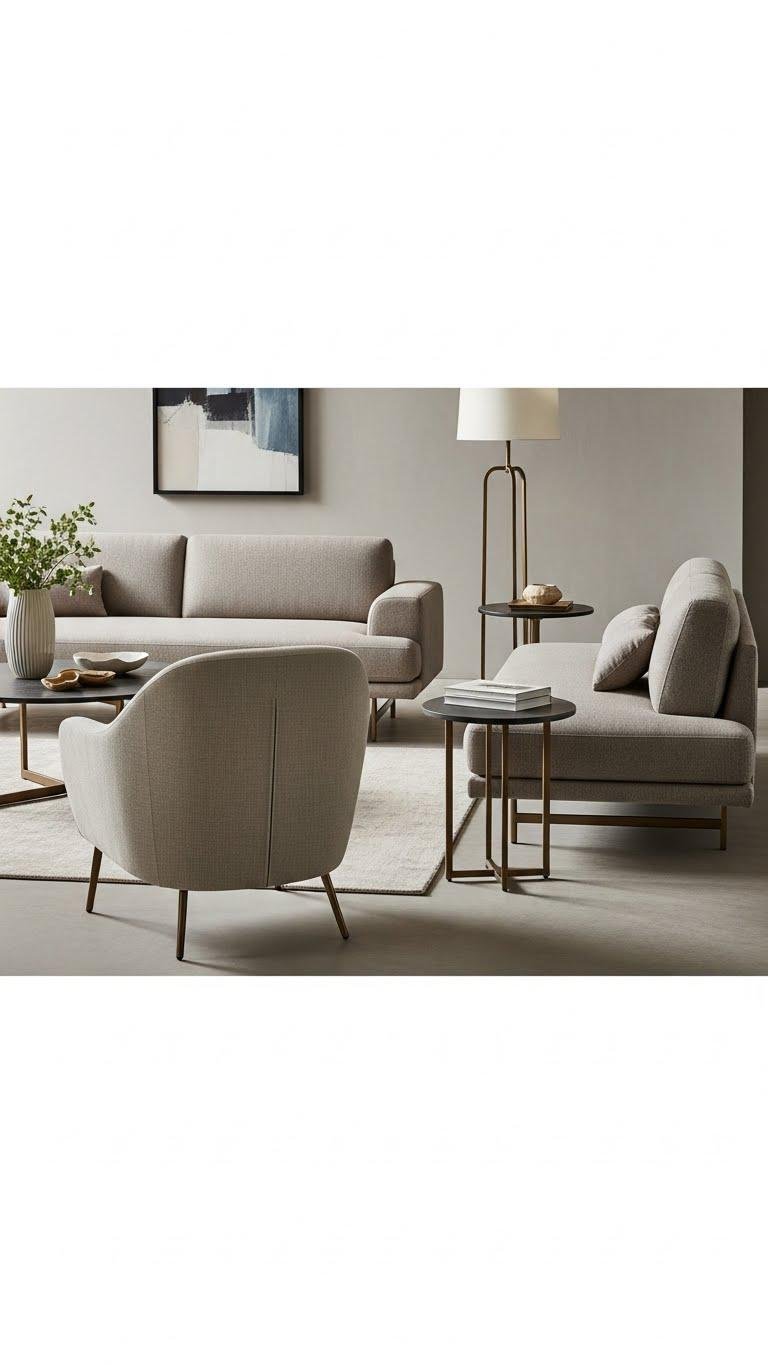
Pair a low-profile sofa with curved accent chairs to balance clean horizontals with soft, sculptural lines that invite lingering. You’ll create a low profile conversation focal point where sleek upholstery meets rounded silhouettes. Choose natural linens, matte leathers, and warm metal legs for tactile restraint. The curved contrast frees movement, encourages conversation, and keeps the neutral palette modern, airy, and effortless.
Organic Modernism With Reclaimed Wood Details

Let reclaimed wood anchor your organic-modern living room, its weathered grain and warm patina setting a grounded counterpoint to clean, contemporary lines.
You’ll pair sculptural sofas with reclaimed joins visible in tables and shelving, celebrating organic grain and honest craftsmanship.
Natural textiles, matte metals, and open sightlines keep the space free, calm, and adventurous—minimalism that feels lived-in and liberating.
Neutral Palette With Emerald Jewel Accents
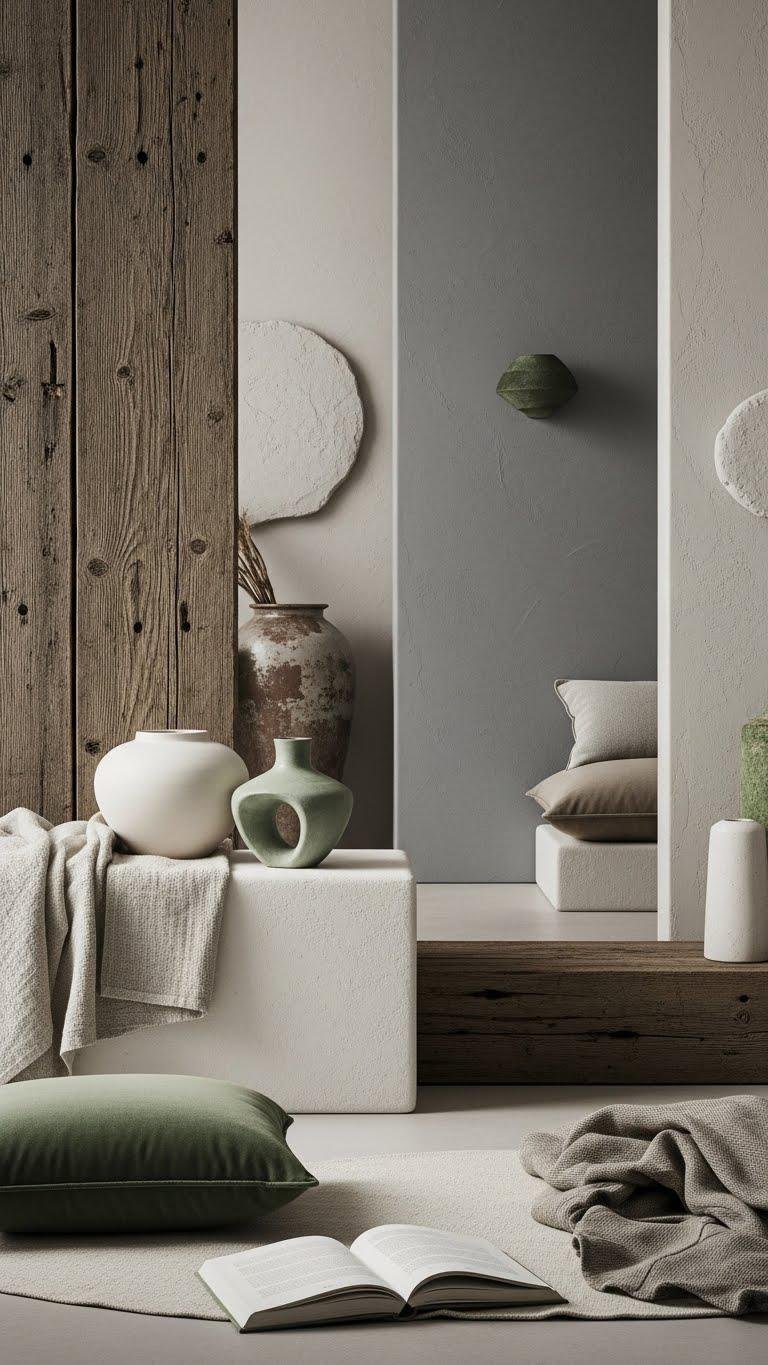
From the warmth of reclaimed wood, shift the eye to a restrained neutral base—creams, warm grays, and soft taupes—that lets emerald notes sing without overpowering. You’ll layer natural linen, matte plaster, and brushed brass for texture, then add emerald accents sparingly: a velvet pops pillow, a low ceramic vase. The result feels airy, tactile, and utterly liberated.
Sculptural Furniture as the Room’s Focal Point
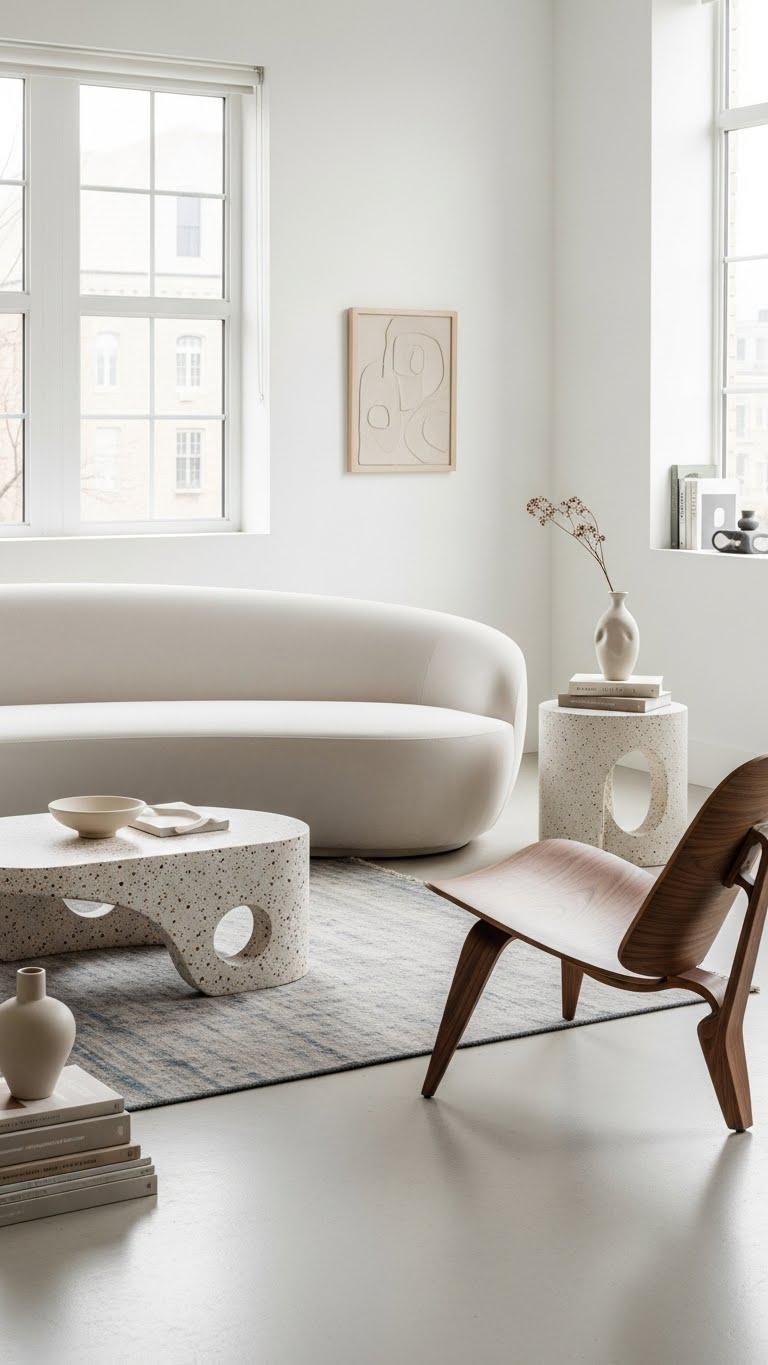
Anchor the room with a single sculptural piece that commands attention—think a curving plaster-backed sofa, an arced walnut lounge chair, or a terrazzo coffee table with organic cutouts—so the eye rests on form as much as function.
You’ll choose pieces with organic silhouettes and statement materials, letting shape dictate flow.
Keep surrounding elements restrained so that freedom of movement and visual calm prevail.
Minimalist Open Concept With Gray Porcelain Floors
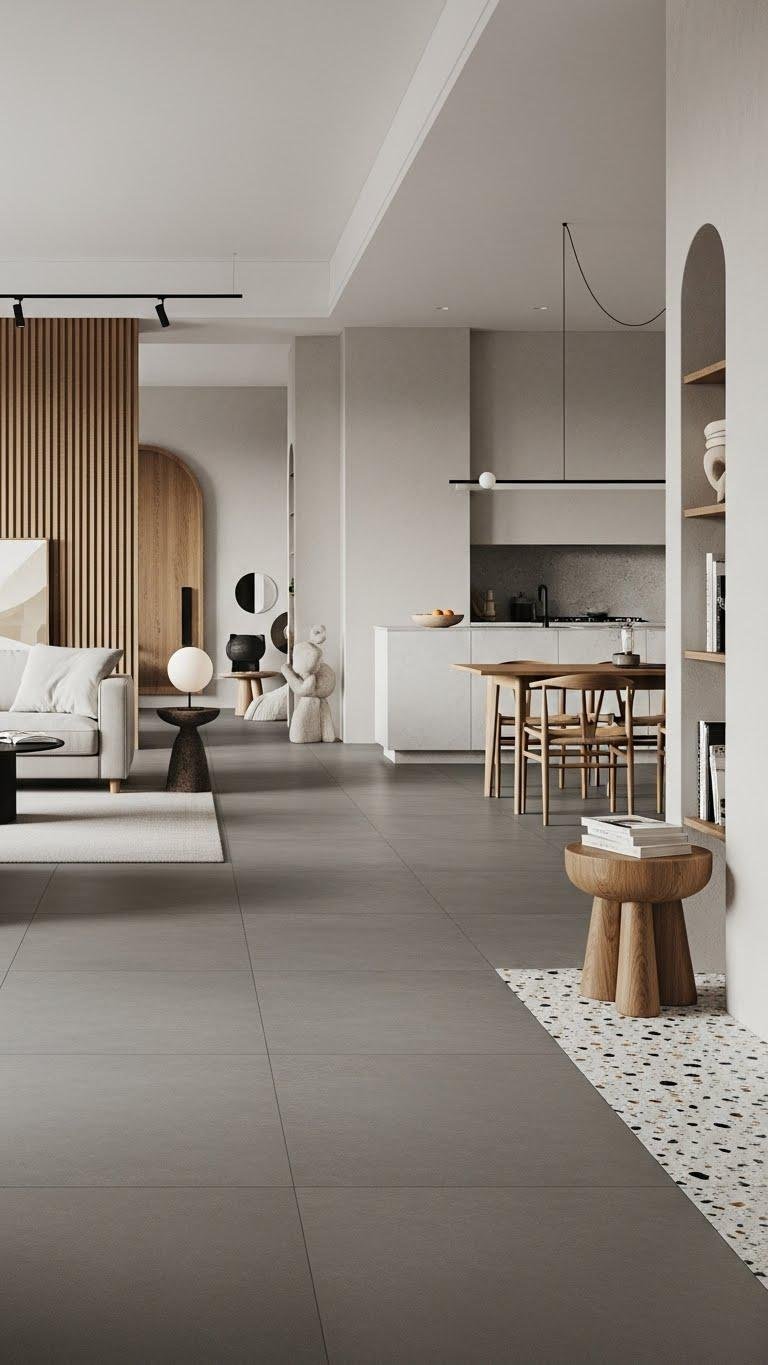
While a generous open plan invites circulation, gray porcelain floors give the space a calm, durable foundation that unifies living, dining, and kitchen zones; their matte surface and subtle veining reflect light without competing with sculptural furniture, so you can layer texture and warmer materials—wood, plaster, terrazzo—without losing the minimalist intent.
You’ll embrace an expansive layout, keep lines clean, and choose tactile accents that honor the matte finish.
Quiet Neutrals Paired With Amethyst Touches

Shift the palette toward quiet neutrals—warm off-whites, sandstone, and soft greige—to let an amethyst accent sing without overwhelming the room. You’ll balance amethyst accents with clean surfaces and tactile materials, choosing muted violets sparingly. Introduce lavender textiles in cushions or throws and a soft amethyst vase. The result feels liberated, calm, and deliberately restrained, celebrating color as quiet punctuation.
Natural Fiber Rugs Over Clean Lines

Often you’ll find that a natural fiber rug quietly grounds a neutral scheme, its woven texture softening clean-lined furniture without stealing focus.
You’ll choose handwoven textures that read simple yet rich, letting cushions and art breathe.
Jute layering adds warmth and tactile contrast beneath sleek sofas, giving you freedom to rearrange, relax, and keep the room calm, curated, and effortlessly grounded.
Warm Glow Floor Lamps and Linen Shades
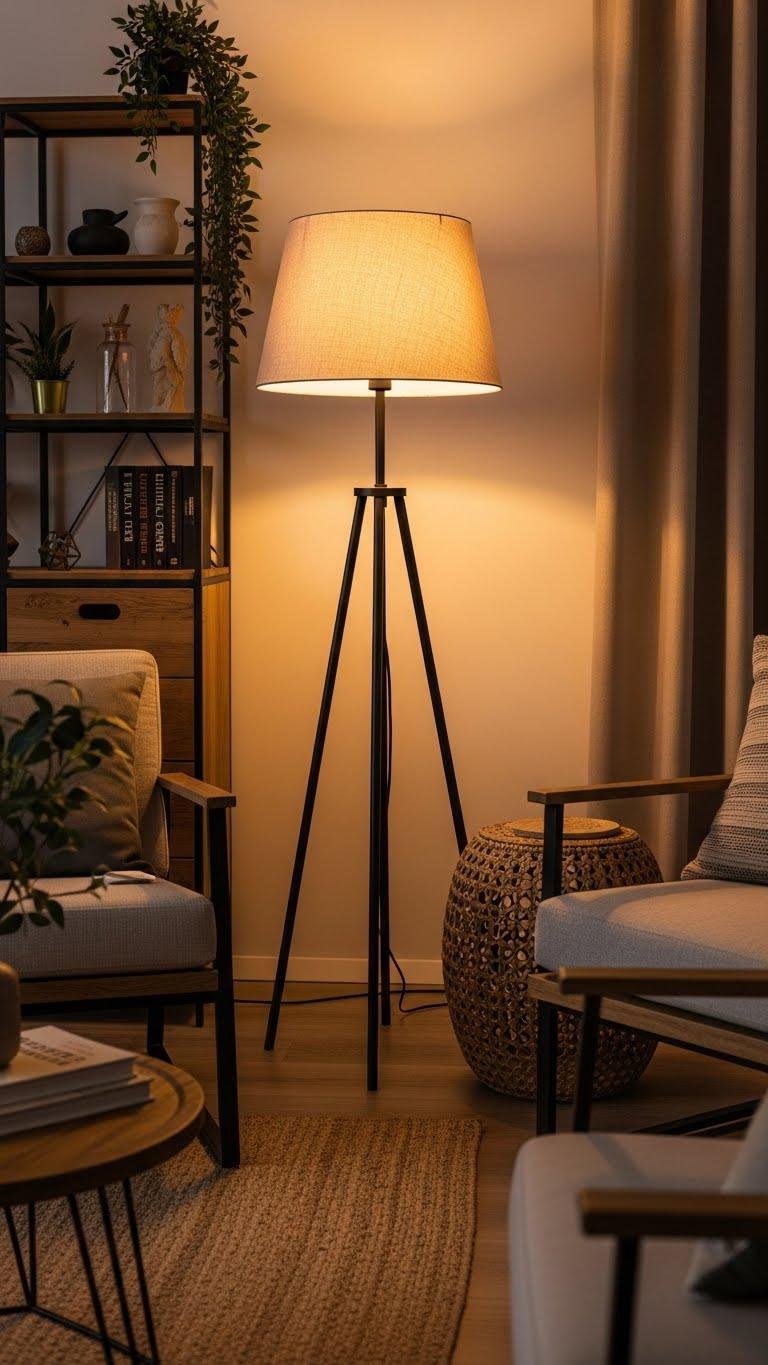
You’ll find that a warm-glow floor lamp with a linen shade instantly softens modern lines, casting a gentle, diffused light that makes materials — wood, metal, woven fibers — read warmer and more tactile.
You’ll use soft illumination to create pockets of calm, embrace linen texture as a tactile counterpoint, and arrange freedom-friendly seating so the glow invites lingering, reading, and quiet conversations.
Layered Neutrals Around a Ribbon Fireplace
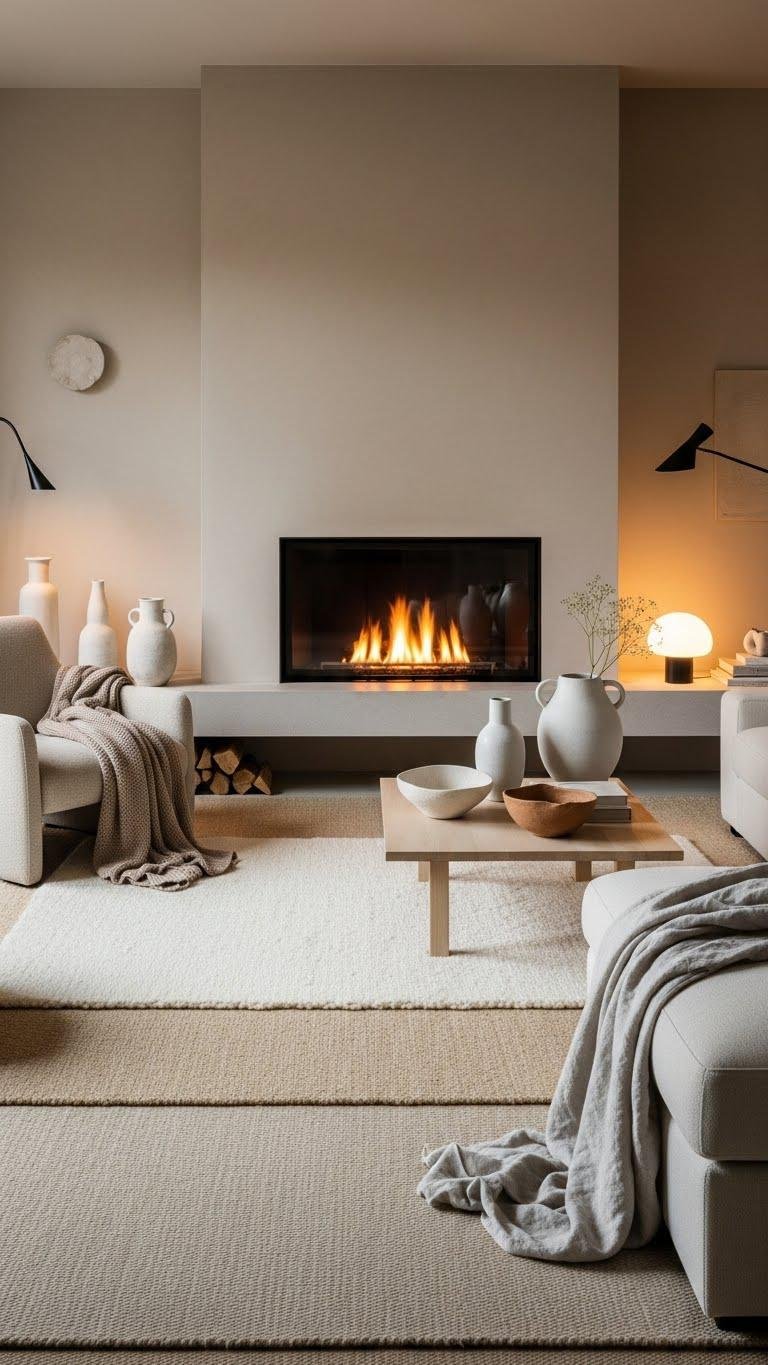
When a sleek ribbon fireplace anchors the room, layer calm neutrals to let flame and texture do the talking.
You’ll balance a low stone hearth with warm plaster walls, soft wool rugs and linen throws. Choose layered textiles in varying tones and weights, muted ceramics and matte metals. The result feels free, refined and tactile—every material earns its quiet spotlight.
Low-Profile Seating in a Formal Living Room

Because the room’s formality calls for calm lines, choose low-profile seating that keeps sightlines open and proportions grounded.
You’ll favor pieces that hug the floor level, with slender bases, restrained upholstery and materials that feel honest.
Opt for tailored proportions so each sofa and chair reads deliberate, not fussy. This creates a liberated, serene space where movement and conversation flow easily.
Mixed Metals and Soft Wood Tones
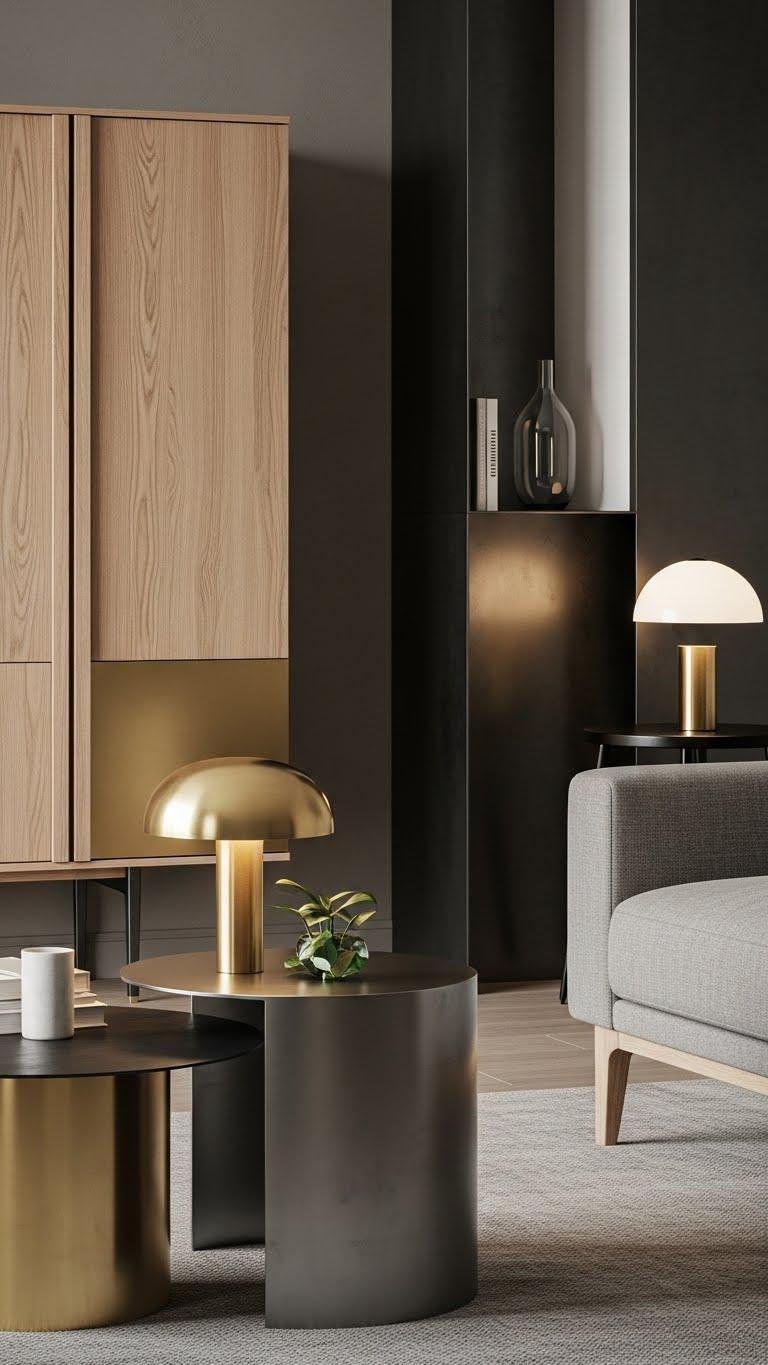
Layering mixed metals with soft wood tones brings warmth and subtle contrast to a neutral modern living room, letting you play with sheen and texture without breaking the calm.
You’ll pair brushed brass accents with ash veneer furniture, balancing matte steel or blackened iron for edge.
Keep palettes restrained, surfaces tactile, and let each metal whisper rather than shout—so your space feels liberated and composed.
Monochromatic Gallery Wall With Line Art
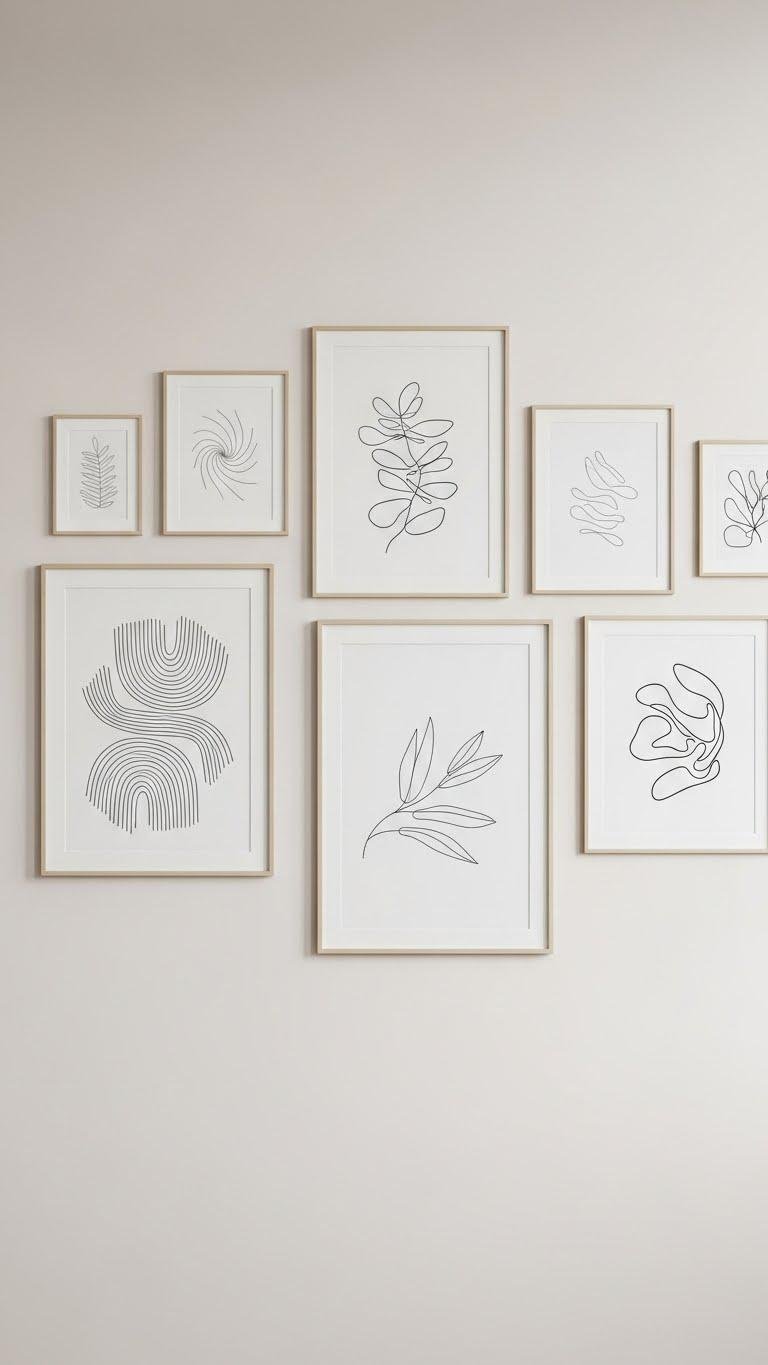
Shifting from mixed metals and soft woods, you can use a monochromatic gallery wall of line art to maintain that calm while adding visual rhythm. Choose matte paper, slim frames, and varied scale to let minimal contours breathe.
Hang with casual symmetry so pieces feel collected, not staged. The delicate strokes of each print invite movement and a freeing, uncluttered atmosphere.
Curved Sofa Anchoring a Calm Conversation Area
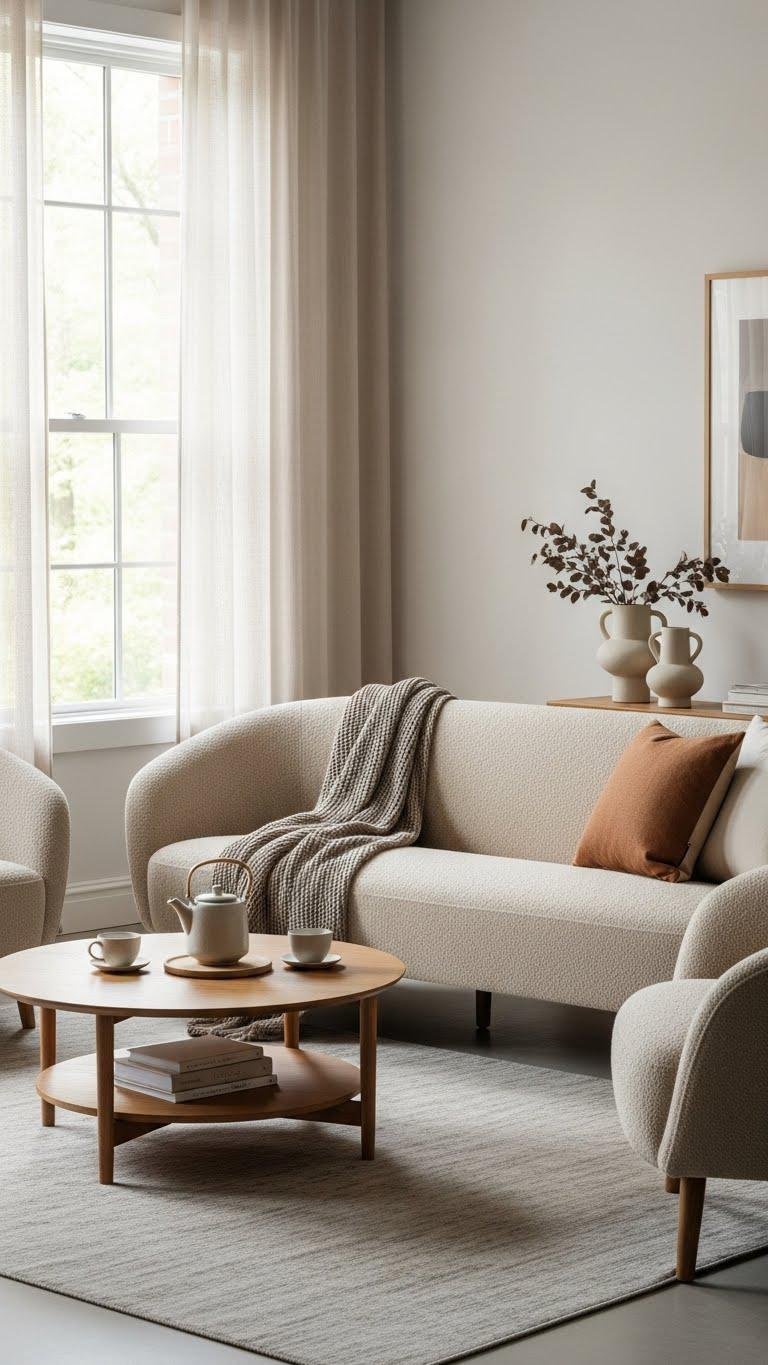
Pull a room together with a gently curved sofa that defines a conversation area without shouting for attention. You’ll choose textiles and low-profile legs that celebrate modular curves and let seating breathe. Arrange pieces at conversational scale to invite easy dialogue, leaving pathways for movement.
Opt for natural fiber upholstery and matte finishes so the shape speaks softly while you reclaim relaxed, unfettered living.
Subtle Contrast: Black Accents on Neutral Base
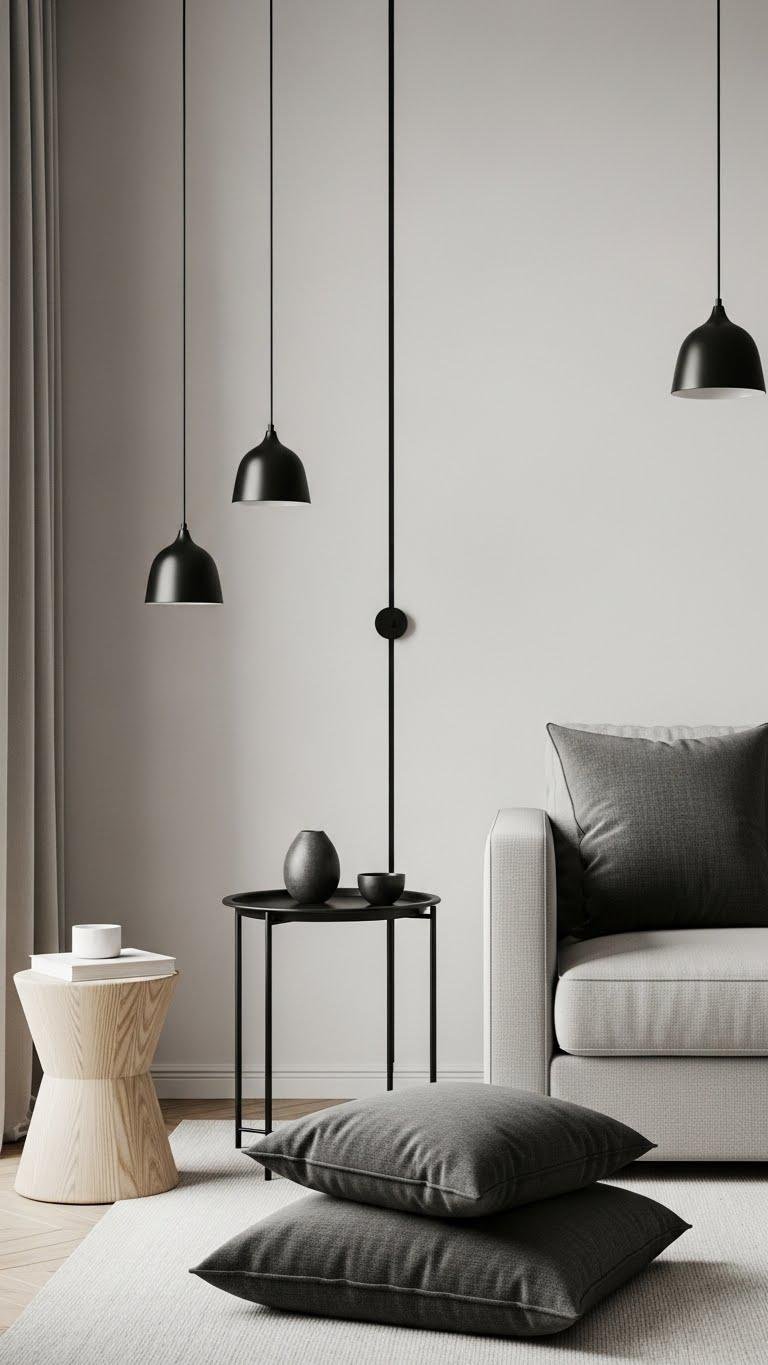
Bring in black accents to sharpen a neutral scheme without overpowering it: small, matte-black elements—lighting, hardware, a slim-legged side table—give definition and depth while the soft palette stays calm. You’ll balance matte black trim with natural woods and linen, place charcoal throw pillows for tactile weight, and let restrained black lines guide sightlines so the room feels liberated, composed, and intentionally pared back.
Sustainable Materials: Bamboo and Recycled Metal Pieces
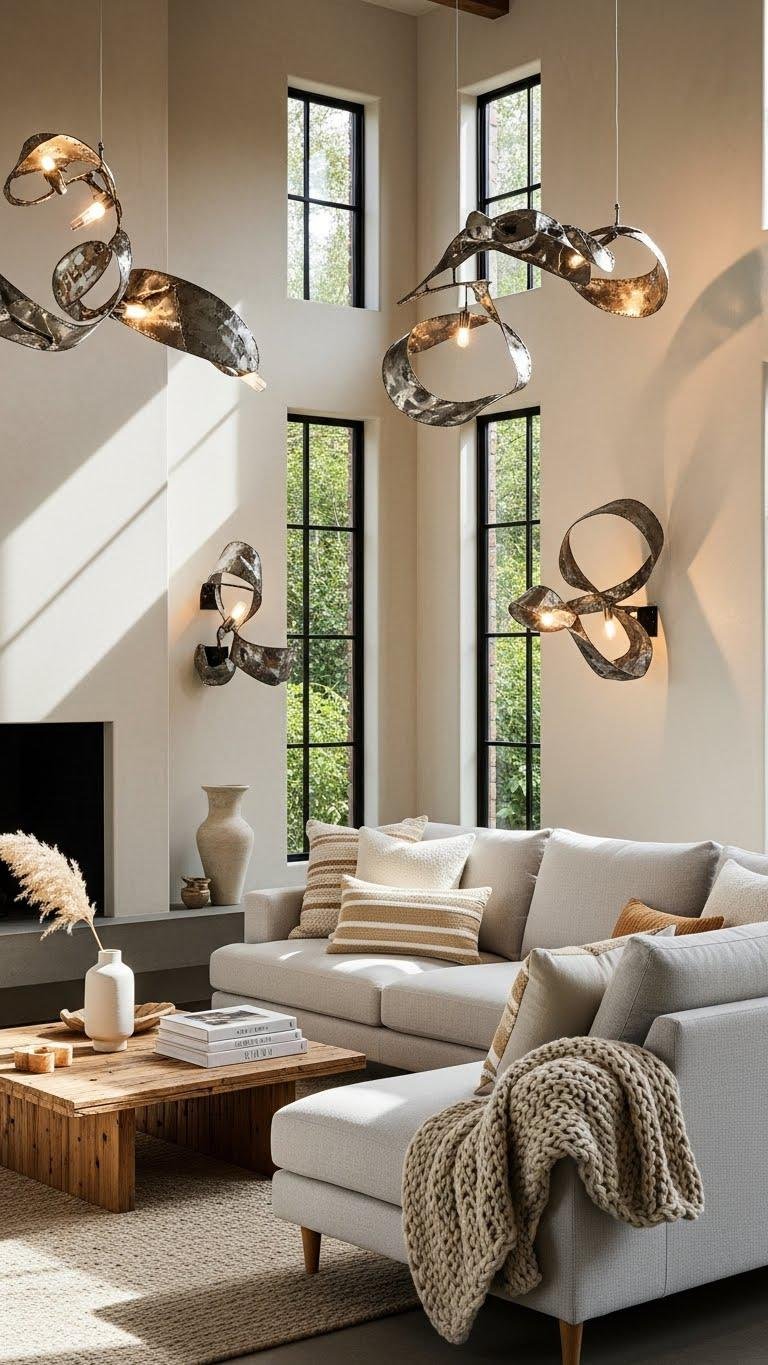
After you’ve sharpened a neutral palette with matte-black accents, layer in sustainably sourced materials to keep the room warm and responsible. You’ll choose bamboo textiles for cushions and throw blankets to add soft, breathable texture. Pair sculptural recycled metal lighting to cast crisp shadows and reduce waste. The mix feels liberated, tactile, and intentional, letting simplicity and conscience coexist.
Beige Walls With Mid-Tone Wood Flooring

A calm foundation, beige walls pair effortlessly with mid-tone wood floors to create a balanced backdrop that lets furniture and texture take the lead. You’ll choose natural woodwork finishes and soft, muted textiles to evoke warmth without clutter. Keep lines minimal, introduce tactile rugs and woven accents, and let sunlit tones and open layouts provide a liberating, understated canvas for personal expression.
Sculptural LED Cordless Lamps in Neutral Finishes

Lean into form and function with sculptural LED cordless lamps in soft neutrals; they double as artwork and task light, shaping mood without stealing the room.
You’ll choose matte brass accents, asymmetrical bases and frosted finishes to balance raw textures. Place them where freedom to move matters — cordless, rechargeable, often with wireless charging — and watch minimal light sculpt space effortlessly.
Defined Seating Vignettes With a Bar Cart

Framed around a low sofa or twin chairs, defined seating vignettes center a compact bar cart to anchor conversation and offer instant hospitality. You’ll choose matte metals, warm wood tops, and spiral shelving to add sculptural utility.
Arrange glassware and bitters with restrained cocktail etiquette cues, leaving space to move. The result feels liberated, tactile, and purposefully composed for relaxed entertaining.
Tile Fireplace Set Against Brown Floors
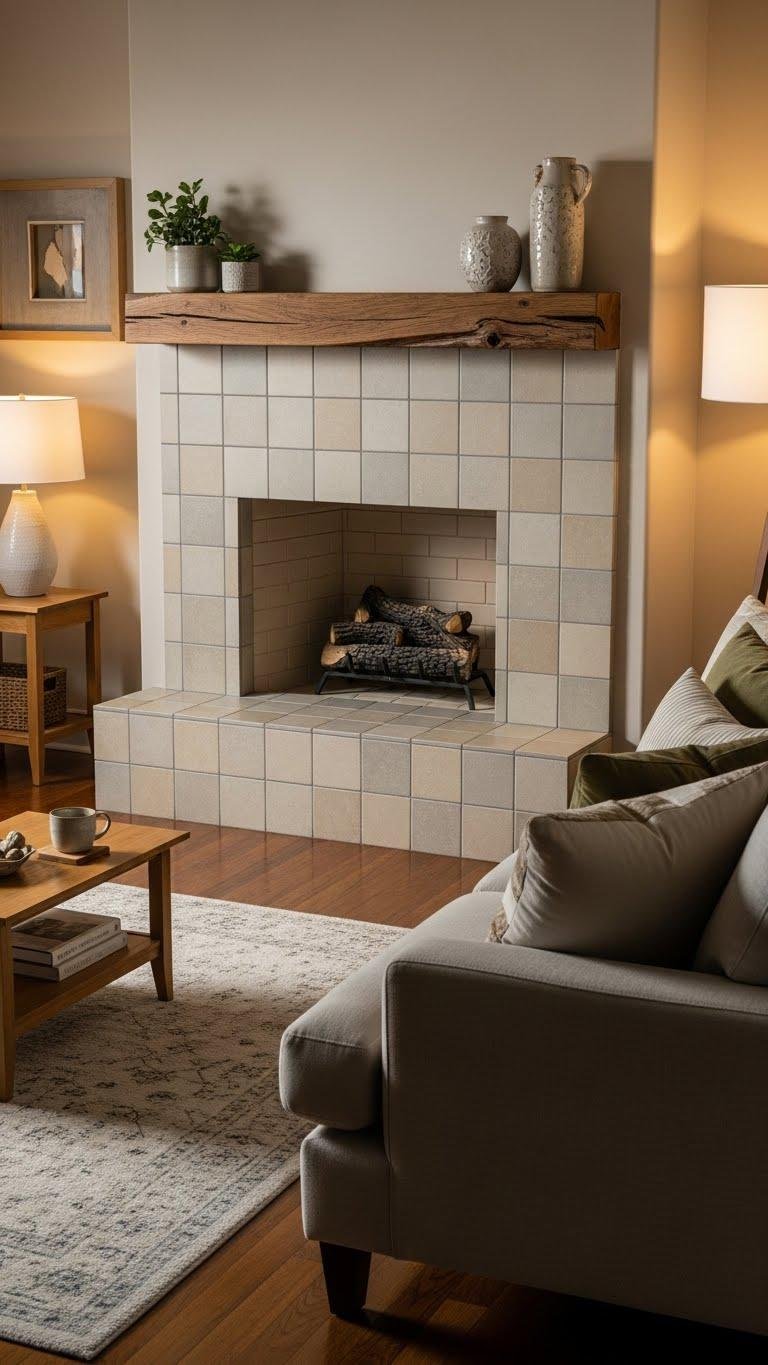
Against warm brown floors, a tile fireplace becomes your room’s tactile centerpiece, its grout lines and surface texture setting the tone for material contrasts. You’ll choose stacked tiles for vertical rhythm and restraint, pairing neutral hues with matte grout to ground the hearth.
Let simple mantel materials — raw wood or concrete — invite touch and movement, keeping the space open and unbound.
Minimalist Layout Emphasizing Negative Space
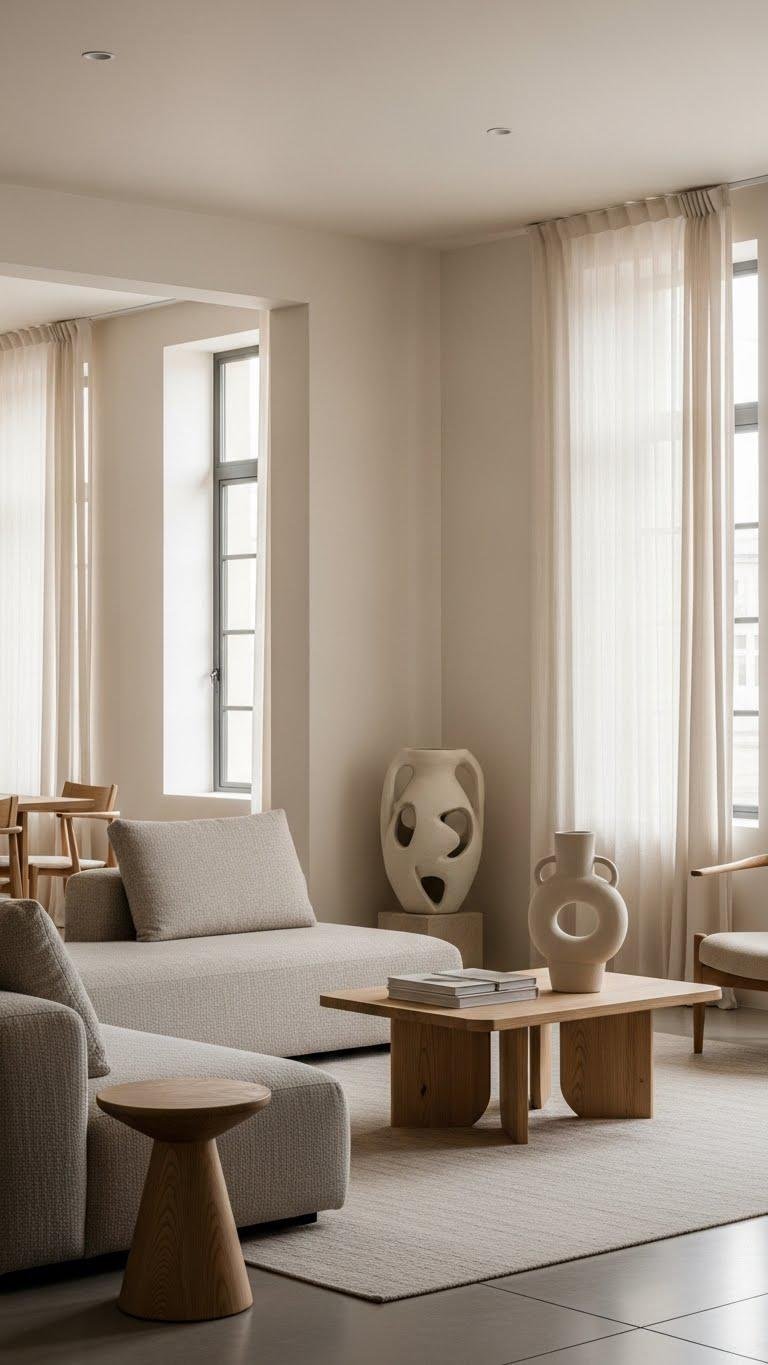
When you pare furnishings back to essentials, negative space becomes a deliberate material — a quiet surface that breathes around objects and highlights texture, proportion, and light. You’ll embrace intentional sparsity, arranging pieces to allow airy circulation and visual rest. Choose sculptural forms, tactile neutrals, and measured distances so focal restraint guides movement, granting you calm, freedom, and room to inhabit each element.
Soft Upholstery Complemented by Glass Accents
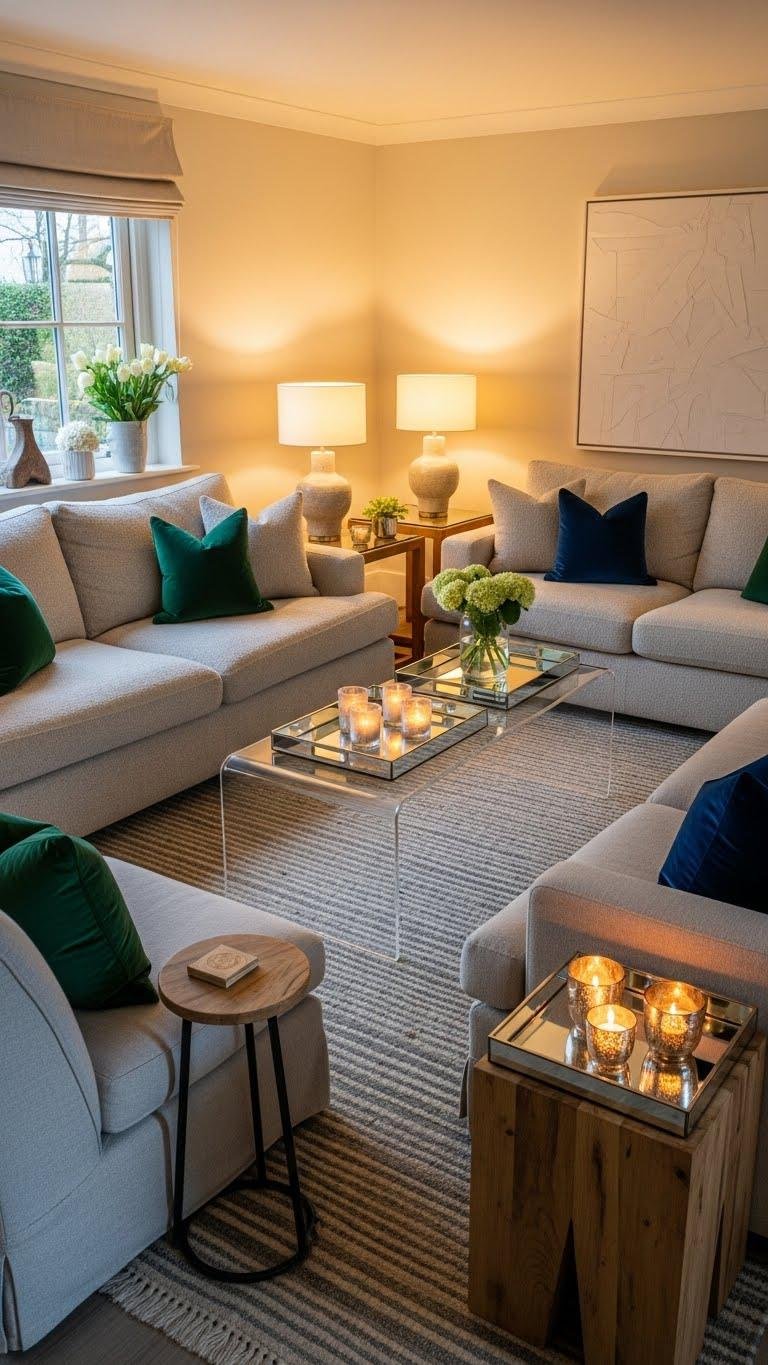
After paring the room back, introduce soft-upholstered seating to anchor warmth and invite lingering; sumptuous boucle or low-profile linen chairs give tactile contrast to airy voids. You’ll layer velvet contrast cushions for depth, pair a slim glass coffee table to keep sightlines open, and use mirrored trays to reflect light.
Let materials speak simply — tactile, transparent, liberating.
Transitional Sculptural Pieces Beyond Kidney Shapes

If you want pieces that read as art rather than mere furniture, look past the ubiquitous kidney curve and explore silhouettes that balance heft and air — think folded planes, softened arcs, and stacked volumes that feel sculpted yet usable. You’ll choose tactile woods, honed stone, and matte metals that reference botanical forms or reveal geometric voids, letting the objects free your room and your spirit.